Borrowed Lunch Bunch Activities {Part I}

Screen Shot 2016-03-02 at 4.16.20 PM

To read more about how I run Lunch Bunch sessions at my school, visit my Lunch Bunch Overview post.

School counselors use Lunch Bunch groups for a variety of reasons. I implement Lunch Bunch groups at my school to build peer relations, strengthen the student-counselor relationship, and increase self-awareness. I’ve found some truly great activities that allow those goals to be met while the girls have fun and engage in meaningful conversation. Below you will find some of my favorite borrowed activities to use in Lunch Bunch.

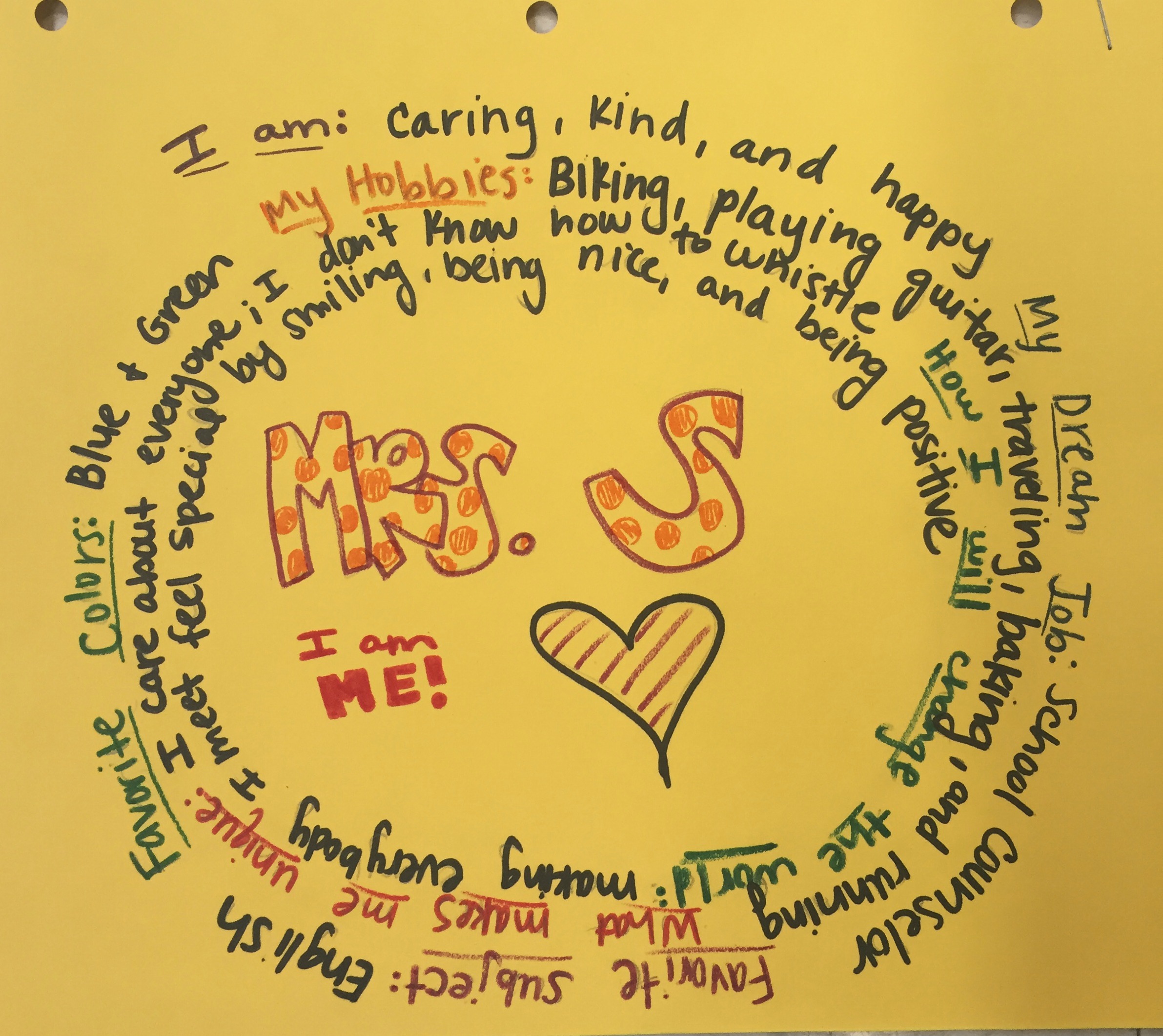
(1) “I Am…” Spirals

IMG_6361

This lesson from The Middle School Counselor {link to original post here} gives students the opportunity to know more about their classmates and to know more about how they define themselves. Each girl writes the following facts about herself in a spiral shape: (1) I am… {for this I had each participant write at least 3 adjectives describing herself} (2) My Dream Job (3) Favorite Subject (4) Favorite Color (5) My Hobbies (6) What Makes Me Unique (6) How I Will Change the World.  Each student then shares her creation with the group, and we discuss our unique qualities.


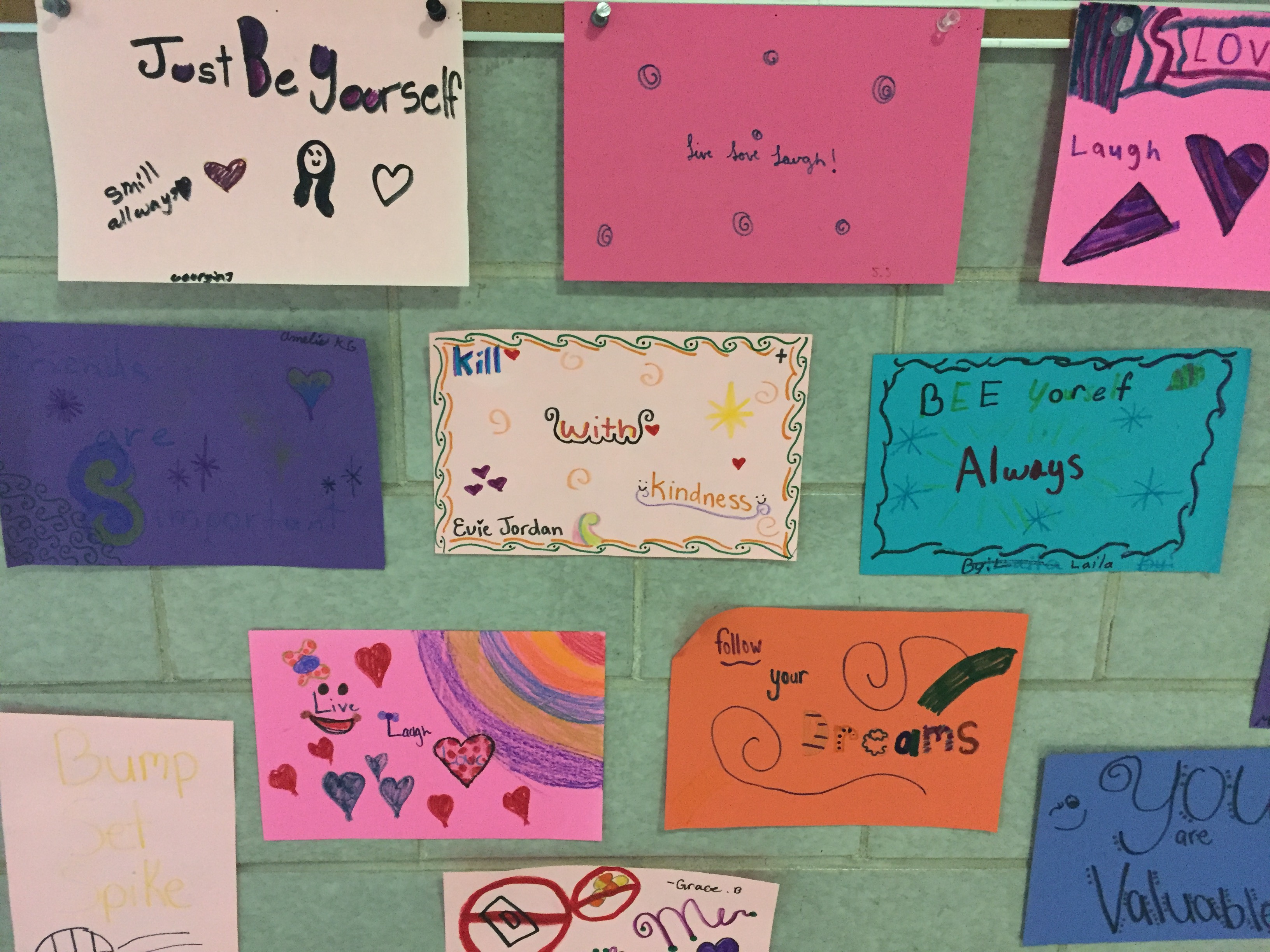
(2) My 3 Words

FullSizeRender 2

The next Lunch Bunch activity I want to share with you all comes from JYJ Counselor Blog {link here}. Each student is given a piece of construction paper and is instructed to come up with a 3 words phrase that has meaning to her or that are words to live by.  The girls came up with some great 3 word phrases, and they enjoyed this activity so much that many of them asked to make more than one!

IMG_5279


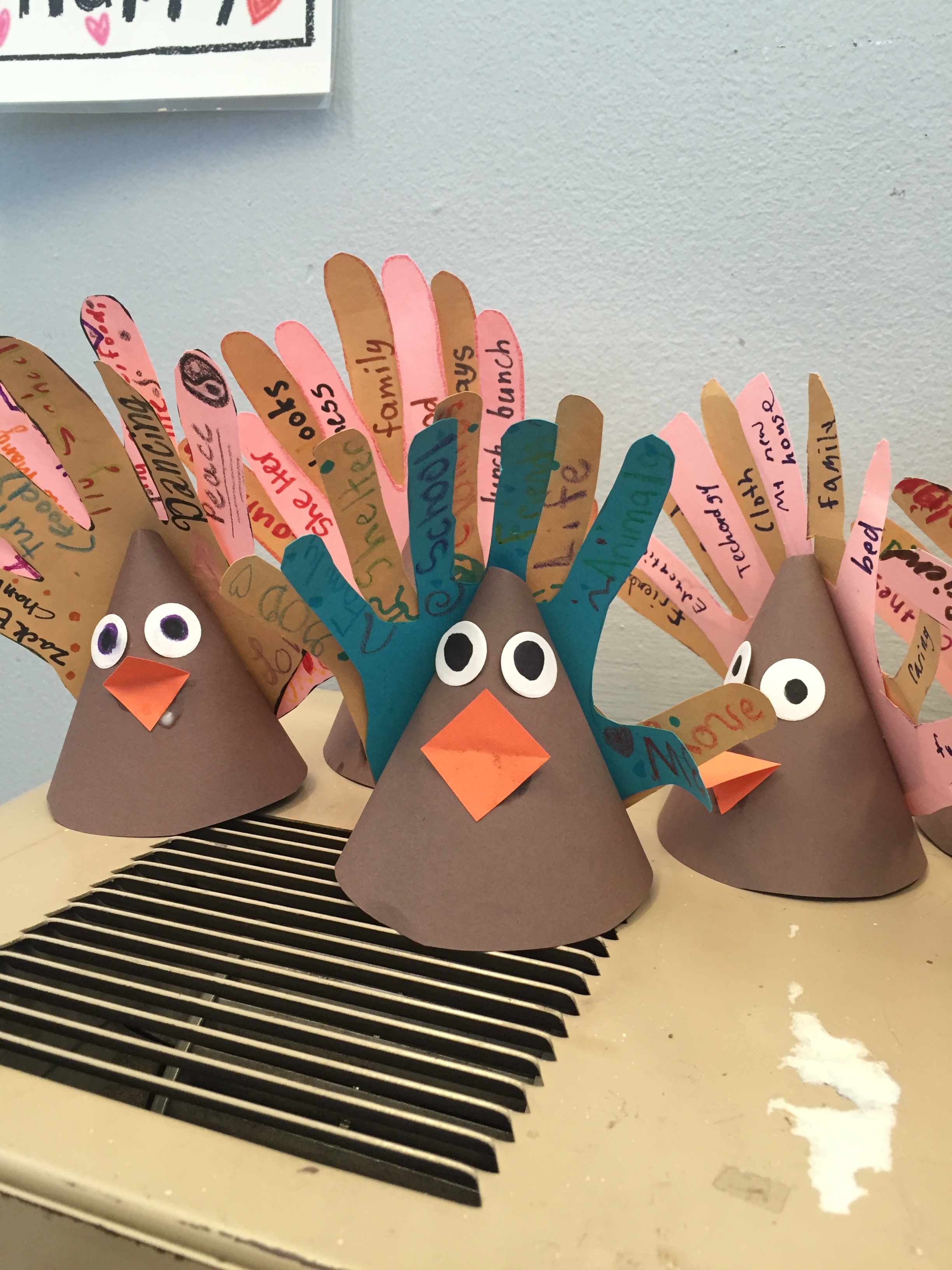
(3) Grateful Turkeys

IMG_5278

Here’s another great activity from The Middle School Counselor! This “10 Things I Am Grateful For” Lunch Bunch lesson worked so well for my groups during the month of November. We talked about gratefulness, and the girls made their own construction paper turkeys with 10 things they are grateful for {one written on each “feather”}. Check out the original post {link here} for instructions on how to make the turkeys!


(4) Declaration of Intention

IMG_6397

I bought and copied {this} declaration of intention page for my Lunch Bunch girls to use during our January groups. We talked about New Year’s resolutions and how they often aren’t kept, then I introduced the concept setting intentions for themselves. Instead of focusing on things like giving up candy or exercising more, the girls filled out this page with things that describe the type of person they want to be this year. My students were very creative when they completed the form, and some of them even keep the page in the front sleeve of their binders to remember what they wrote {which I love!}.


Thanks to all of the amazing school counseling bloggers out there who share their ideas! Stayed tuned for Part II!


Screen Shot 2015-10-12 at 8.12.23 PM

The Importance of Self Care and How to Add it to Your Life

Screen Shot 2016-02-26 at 3.43.07 PM

As counselors, we spend most of our time tending to the needs of our clients, which is a wonderful thing. However, I find that people in helping professions often put their own needs on the back burner while they are taking care of others. If we do not take the time to ensure that our own bodies, minds, and spirits are cared for, there is a strong possibility we will begin to experience burnout and have a difficult time doing our jobs well. As the Dalai Lama so eloquently put it,

“In dealing with those who are undergoing great suffering, if you feel “burnout” setting in, if you feel demoralized and exhausted, it is best, for the sake of everyone, to withdraw and restore yourself. The point is to have a long-term perspective.”

To read more about my journey toward incorporating self care practices into my life, read my guest blog piece featured on the Milligan Movement blog titled “Why Self Care is So Important and How to Add it to Your Life.”


Screen Shot 2015-10-12 at 8.12.23 PM

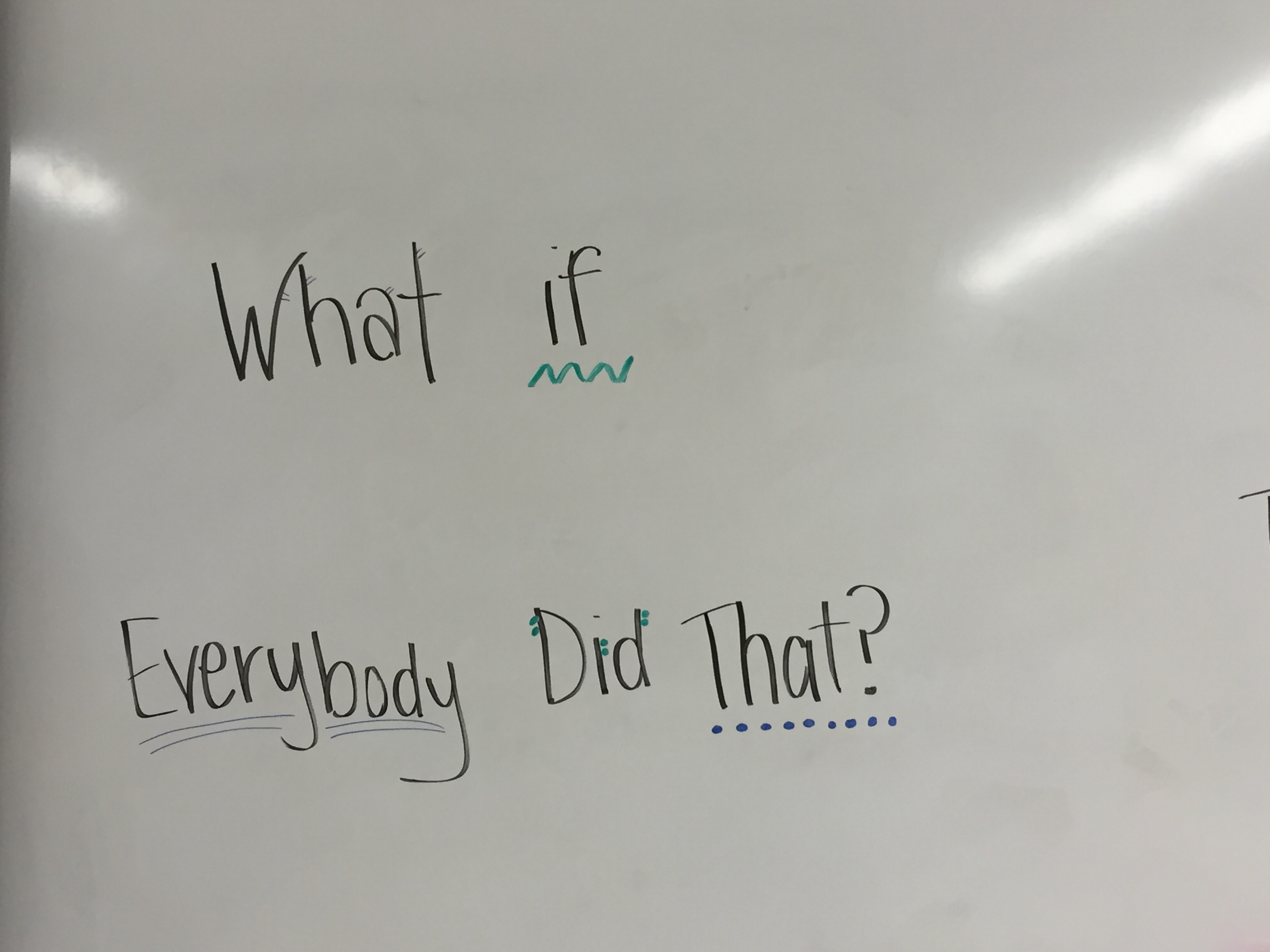
1st Grade Lesson on Respect: What If Everybody Did That?

Screen Shot 2016-02-16 at 5.39.51 PM

What If Everybody Did That?: A 1st Grade Lesson on Respect

I absolutely love the book What If Everybody Did That? by Ellen Javernick! For those of you who aren’t familiar with the book, it centers on a boy who makes some seemingly minor bad decisions, such as throwing trash out of the car window and taking a lick of icing off of a wedding cake. Each time the boy does one of these things, an adult asks him, “What if everybody did that?” The following page then depicts what would happen if EVERYBODY did what the boy did {i.e. if everybody littered, the streets would be completely filled with garbage, and if everybody took a harmless bit of frosting from a wedding cake, the entire cake would be ruined}. The illustrations in this book are fantastic, and the children really seem to enjoy it. Keep reading to see how I use What If Everybody Did That? as a basis for my 1st grade lesson on respect.

IMG_6344

I begin the lesson by reading the book to the class. I have the students help me tell the story by saying out loud, “What if everybody did that?!” whenever an adult in the book says it. This makes the story more interactive and reinforces the phrase with the children.

Next, I write the word ‘Respect’ on the board. I ask the students what they think respect means, and I write their answers on the board as well. We talk about respect together, including the ways we show others respect.

IMG_6342

Then, I ask the big question: Who should we respect?  The students typically say things like parents, teachers, and police officers, but eventually, one student {in most cases} will say the answer I’m looking for, which is EVERYONE. Let’s face it, we’re not going to like everyone we ever meet, and we certainly don’t have to be friends with the people we don’t particularly care for, but all people deserve to be treated with respect. We talk about what would happen if everybody did that. What if everybody treated everybody with respect? I personally agree with my 1st graders that the world would be a much better place.

To finish out the lesson, I let the students role play some of the pages from the book. For example, I’ll have one student talk while I am talking, which is mildly distracting, and then I’ll have the entire class talk while I am talking, which is total chaos. After each scenario, we discuss the differences and relate the experience back to the book, to respecting others, and to making good choices.

I think this lesson also give the teachers a phrase to use when a child is doing something disrespectful. They can simply ask the child, “What if everybody did that?” in order to initiate a discussion on the behavior.

Buy the book here

*Amazon affiliate link


I hope you all enjoyed this lesson! Remember to like The School Counselor Life on Facebook! When the page reaches 50 likes, I’ll be sharing a freebie on the blog to celebrate!


Screen Shot 2015-10-12 at 8.12.23 PM

Marketing Your Program & Advocating for Your Profession

Screen Shot 2016-02-07 at 10.31.58 AM

As many of you know, last week was National School Counseling Week. What a great opportunity to continue advocating for my role as a school counselor by educating administrators, teachers, and parents at my school. The good news is that we don’t only have to advocate for school counseling during National School Counseling week…we can educate others and market our programs throughout the school year as well!

Typically, we have a pretty good idea of what doctors, teachers, and lawyers do in their careers. Because of how much the school counseling profession has changed in recent years, it makes sense that others may not really know what we do or what we are capable of doing. Many people who are parents of young children today didn’t have a school counselor when they were kids {especially in elementary school} or had a guidance counselor in high school who helped them choose a college. Depending on the precedent set in your school, teachers may think you are a glorified disciplinarian or see you as the “fun aunt/uncle” who visits their classrooms once a month. Perhaps administrators think we should be doing secretarial work or have extra duties because we don’t have a set schedule like teachers do {which of course must mean we have TONS of free time, right?}. 😛


There are a few ways that I advocate for my role throughout the school year:

(1)Promoting My School Counseling Program

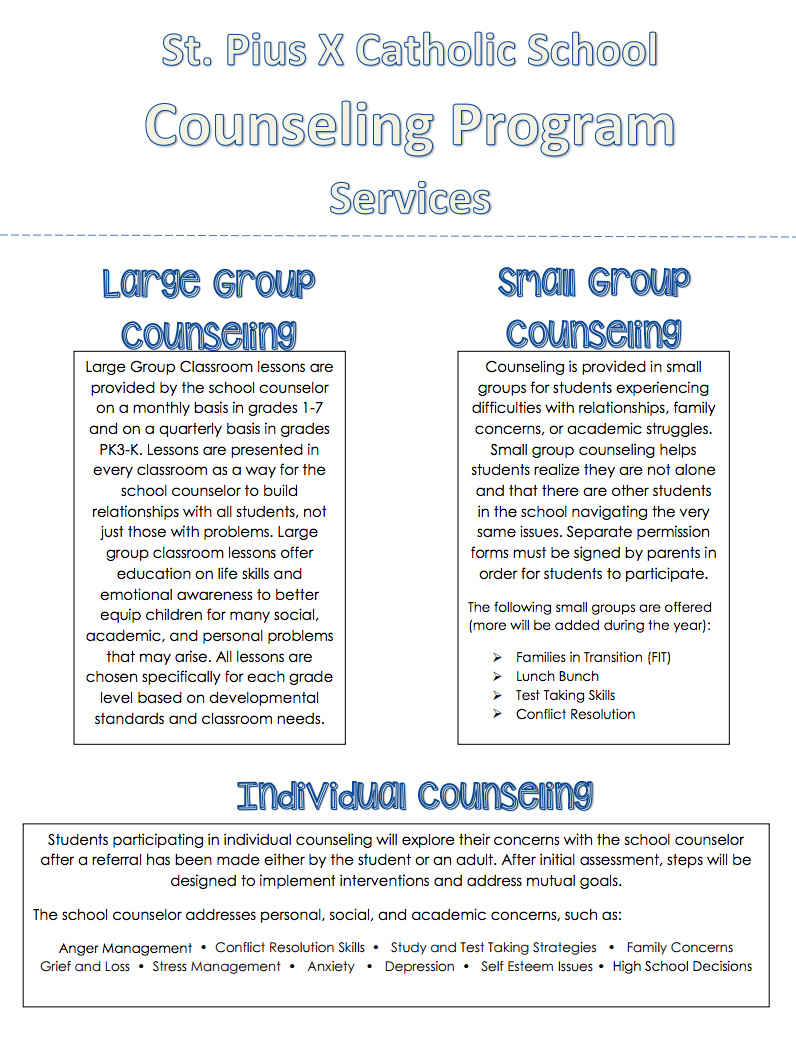
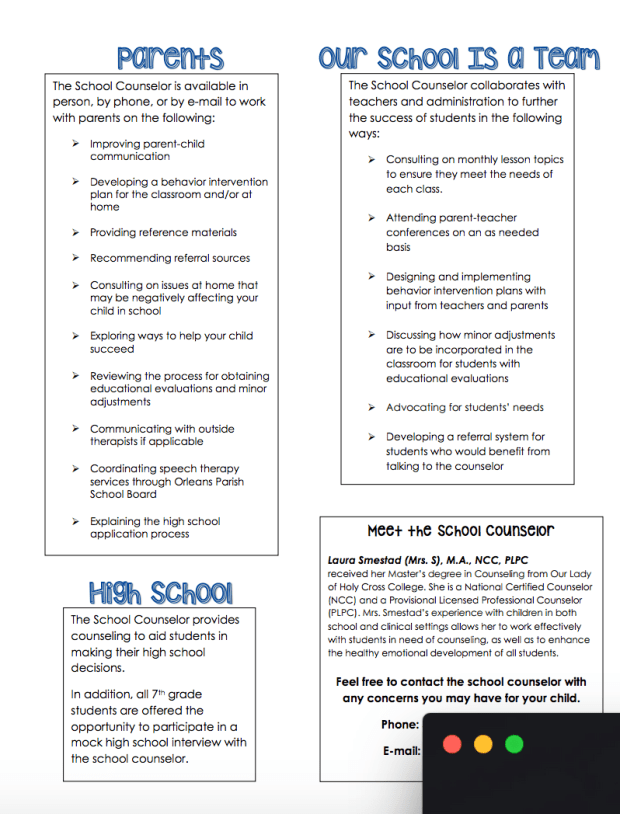
Every August, my school has an event called Back to School Night where parents come to school to learn more about what their children will be doing in the classroom that year. Since I have not yet learned how to bi-locate, I can’t possibly go to every classroom presentation to promote the school counseling program. Instead, I give out brochures that explain what I can do to help students and parents. Brochures are also sent home with children who did not have a parent attend back to school night.

FRONT:

Screen Shot 2016-02-07 at 10.13.48 AM

BACK {with personal contact info blacked out}:
Screen Shot 2016-02-07 at 10.22.27 AM


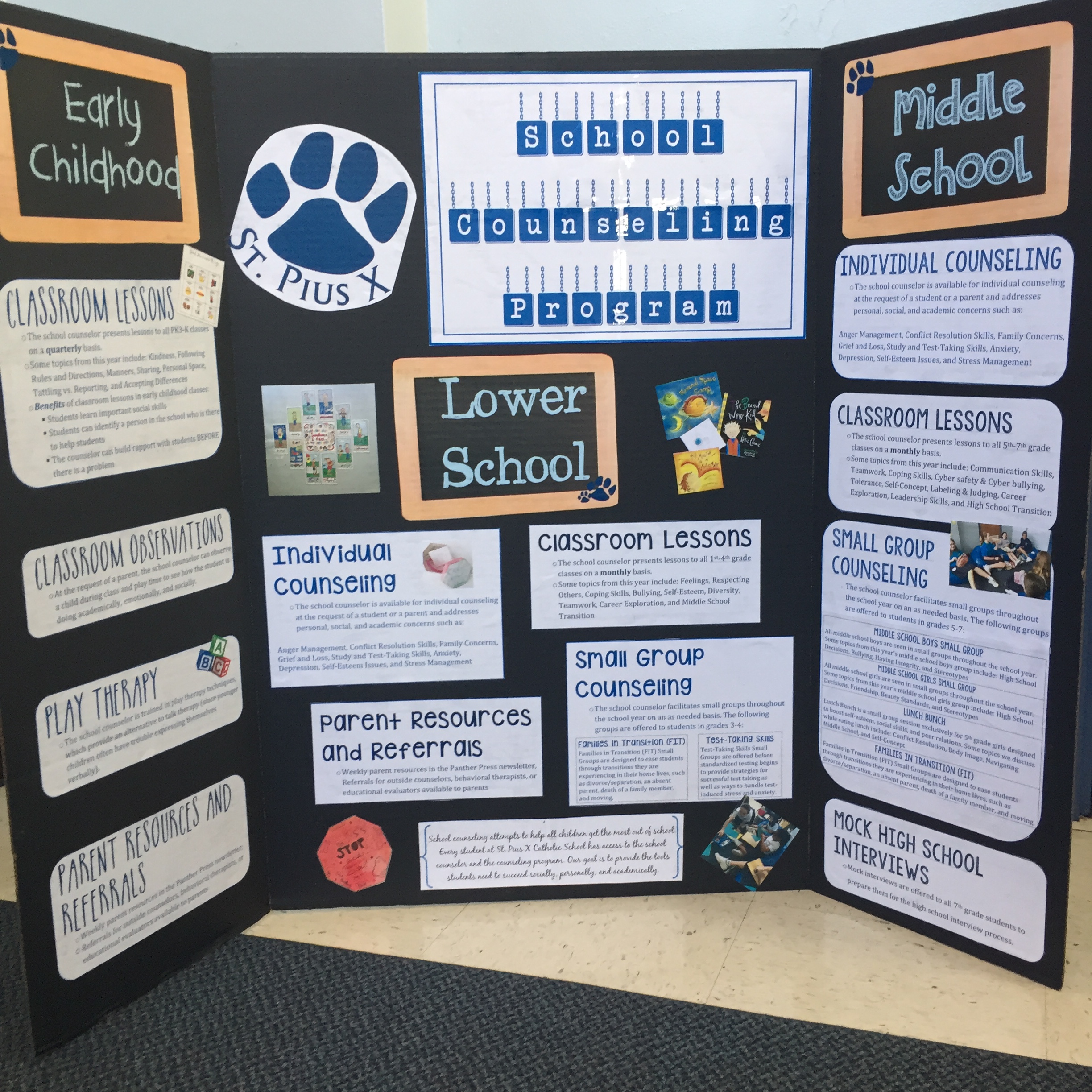
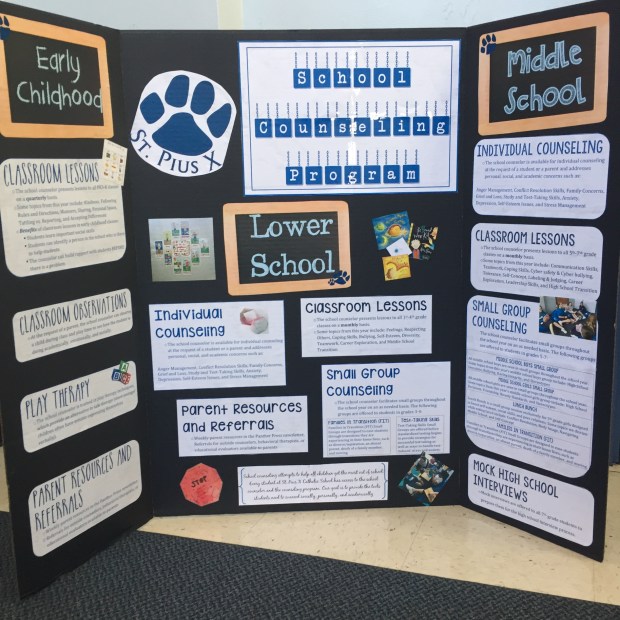
I also promote my program to prospective parents during our open house event every year. I created a display board that outlines the school counseling program from early childhood through middle school. This allows parents to see that I am present in the students’ lives from their first day of school to their last, which truly shows the comprehensive nature that school counseling programs strive for today.


IMG_6084


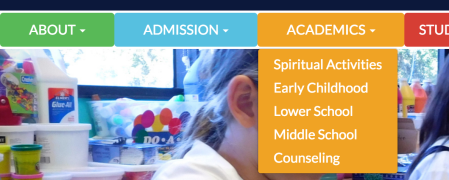
At my request, my principal added a Counseling page to the school website, so parents are aware from the moment they view our webpage that there is a school counselor who is active in the school.
Screen Shot 2016-01-18 at 9.00.23 PM

Screen Shot 2016-01-18 at 8.59.32 PM

My presence in the school newsletter {which you can read about here} is another great promotion for the counseling program because it reminds the parents I am there and that I am a resource they can use throughout the school year.


(2)Eliminating the Use of the Term Guidance Counselor

On every document with my name, every e-mail, and every column I write for the weekly newsletter, I always include my credentials and my title of school counselor. The parents and administrators at my school never see the words “guidance counselor” on anything I send out.

Another place I eliminate this term is when I refer to my classroom lessons. I know that technically they are referred to by most as guidance lessons, but I feel that creates a little confusion since we are so adamant about the title of School Counselor {without the word guidance}. I simply refer to them as classroom lessons.


(3)Educating About What School Counselors Do

The marketing strategies I listed above are great ways to educate parents about the role of the school counselor, but how do we educate administrators, teachers, and even students about what we do?

Administrators and teachers –

As I’ve mentioned in other posts, I am extremely lucky that the majority of what I do is counseling related. I don’t have a lot of extra tasks that interfere with what I should be doing as a school counselor, but in the times that I have been assigned things that are not supposed to be a part of the school counselor’s role, I have had to educate and advocate for what I was hired to do. For example, when I first started at my current school, I was given recess duty every single day. Not only was it a dual role {because recess duty teachers are supposed to discipline} but it was taking up the best time for me to see students. Halfway through the school year I was able to negotiate to only have recess duty twice a week because I began my Lunch Bunch groups 3 times a week. At the end of the year, I had the big conversation about getting rid of my recess duty altogether. I provided literature on dual roles and why school counselors do not discipline the students. I talked about how recess was one of the best times for me to see students because they wouldn’t miss any class time. I also brought up how difficult it was for me to observe anybody at recess {as I had been asked to do many times} because sometimes I had to switch the duty I had with another teacher, and then even when I was at the right play yard, it was hard for me to watch one student when I was supposed to be watching ALL of them. Even though this conversation was not easy for me as a non-confrontational person, I ended up with no recess duty and more time to work with my students.

Another way I advocate to my administrators is through my annual report. At the end of the school year, I submit a report that includes pretty much everything I’ve done that year. I include things like how many individual and group sessions I’ve conducted, how many parent phone calls and meeting I’ve had, etc. I’ll be posting more about this in May.


Students—

I’m a firm believer that we should educate our students about what we do so that they know how we can help them. In order to do this, my first lesson in every grade level is an intro to counseling lesson. I do different lessons for this based on grade level, but at the end of each lesson, the kids know how I can help, how they can ask to see me, where my office is located, and the rules of confidentiality.


We are part of an amazing profession! Let’s advocate for our roles as school counselors and show others just what we are trained to do so that we can help more students in the long run.

 

Screen Shot 2015-10-12 at 8.12.23 PM

Student Mock Interviews

Screen Shot 2016-01-23 at 6.12.57 PM

Almost everyone at some point goes through an interview process. It could part of applying to college, an internship, a job, or — in the case of my students — high school. Yes, high school.

In the Catholic school system in NOLA, high school begins in 8th grade, and students are not guaranteed spots in a particular school. Each student fills out an application, attends a day of placement testing, and {depending on the school} participates in an interview. Because the idea of an interview with a high school administrator can be overwhelming to a 12 or 13 year-old, I offer mock interviews as a resource for my students.

When it gets close to interview time, I go into each 7th grade class with a sign up sheet for anyone who is interested in a practice interview. From that list, I create a schedule and assign a date and time to each student.

Because I think it builds responsibility {which they will definitely need as they transition into high school}, each student is responsible for showing up on the right day at the right time of his or her scheduled interview. With very few exceptions, my 7th graders do a great job remembering and keeping their appointments, which makes me so proud.

The questions I ask are geared toward high school {i.e. Why do you want to attend _____ school? What extracurricular activities are you involved in? What do you think you could contribute to the school?}, but obviously questions could be adapted to any situation.
After the mock interview is over, I talk to the student about things he/she is doing well and things to work on before the actual interview. I also send them off with a tip sheet of best practices for any interview. {See below.}

Screen Shot 2016-01-26 at 5.41.20 PMScreen Shot 2016-01-26 at 5.41.34 PM


Mock student interviews can be beneficial for high school counselors to do with seniors who will either be applying to college or for a job. They could also be a great addition to career lessons in elementary or middle school. After all, teaching these life skills to children can set up a strong foundation for the future.

Screen Shot 2015-10-12 at 8.12.23 PM


My 5 Minute Morning Makeup Routine

Screen Shot 2016-01-24 at 3.22.24 PM

First things first: I am NOT a morning person. At all. So, in a way, it’s kind of humorous that I decided to work in a school of all places. Every morning when my alarm goes off, my body seriously resists waking up, and only the thought of how much I love my job and the little kiddos that come with it do I muster the energy to get out of bed. Because of this, I need a morning routine that is quick, simple, and allows me to look put together for a day of work. If you relate to any of this, keep reading to learn about the no-fuss products I love to use in the morning.

Side note: Sorry to my male readers. I know this makeup routine probably won’t be beneficial to you. 😛

Also, I was not paid to review any of these products. They are just my own personal favorites.


(1) Concealer

FullSizeRender 16

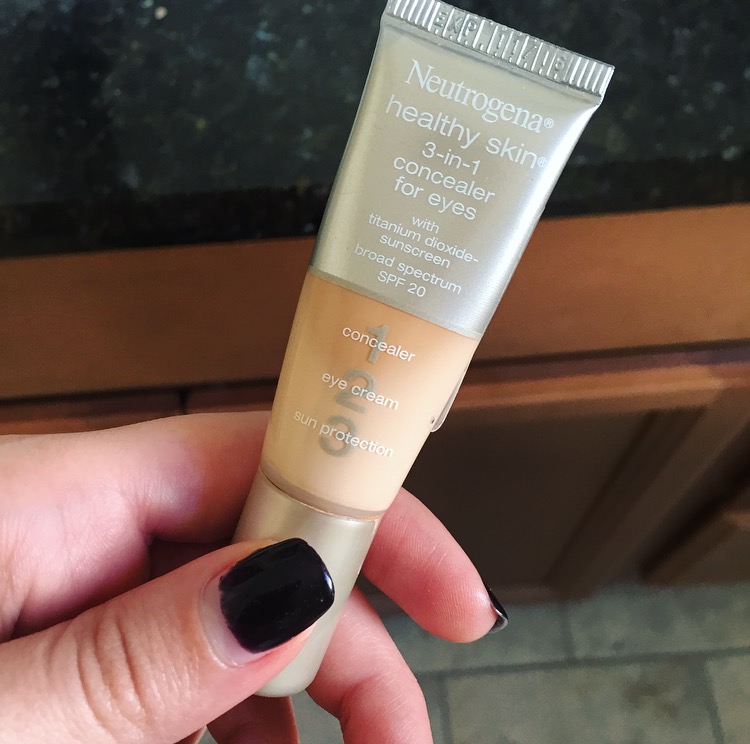
Once I’ve taken care of the necessities like brushing my teeth and washing & moisturizing my face, I start my makeup routine with some under eye concealer with SPF. About a year ago, I began to notice some sun damage underneath my eyes, which was a wake up call to me to start protecting that sensitive skin. I love the Healthy Skin 3-in-1 eye concealer from Neutrogena. It covers up dark circles while defending my under eye area from sun damage. Remember to always apply your concealer with a VERY light touch of your ring finger to protect the most sensitive skin on your face.


(2) Liquid Eyeliner

FullSizeRender 17

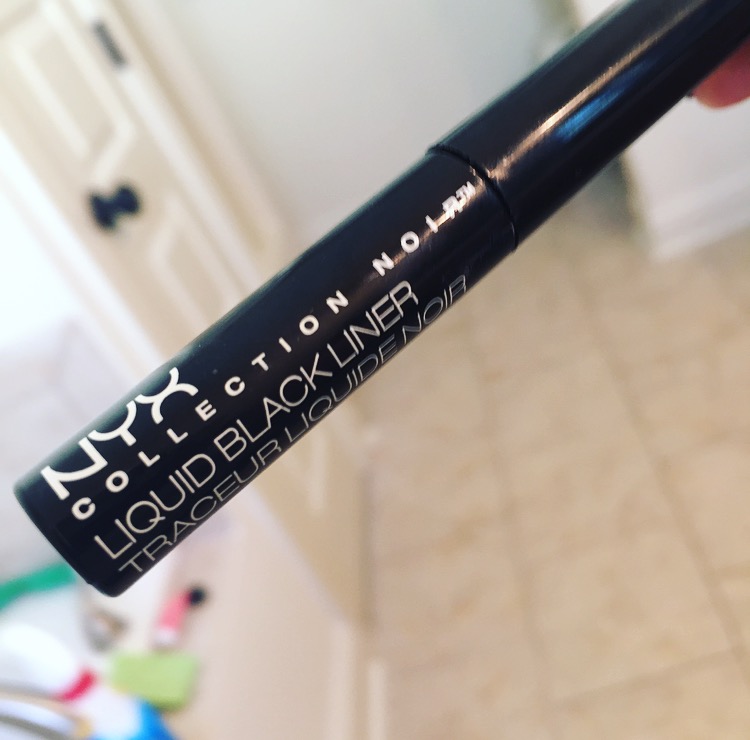
I LOVE liquid eyeliner. Once you get the hang of using it, it takes only a few seconds to apply, and it lasts all day. My personal favorite is the NYX Liquid Black Liner. The brush is easy to control, it comes off easily, and it’s cheap.

(3) Mascara

FullSizeRender 10

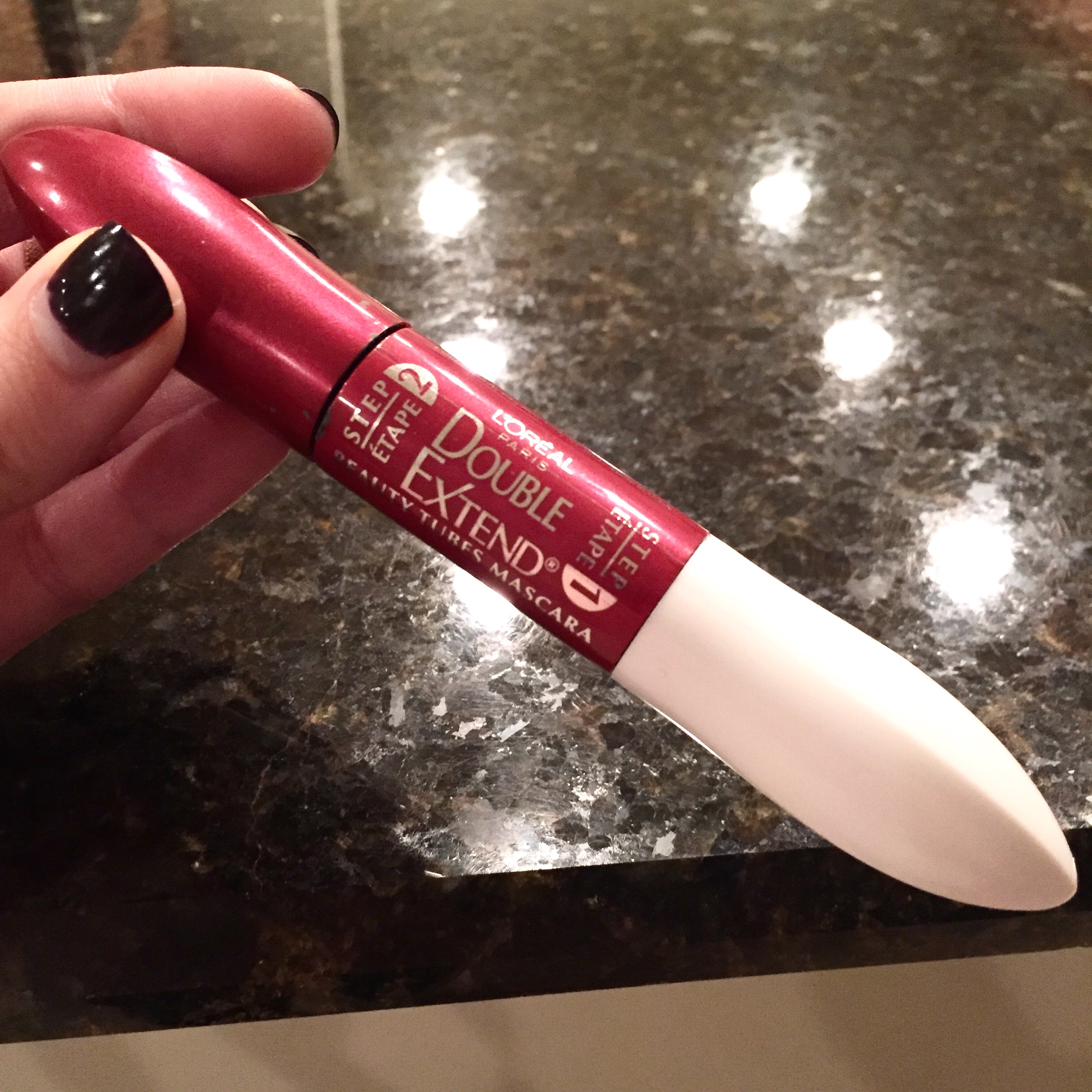
If I had to choose only one makeup item to use for the rest of my life, it would definitely be mascara. I’ve tried quite a few mascaras through the years, but I always seem to come back to L’Oreal Double Extend. This mascara has two ends: a white coating that adds length to the lashes and a black coating that goes on top. It makes my lashes look much longer, but the biggest reason I love this mascara is the ease of taking it off. Because it essentially adds little tubules to your lashes, those fibers slide of easily with warm water. Yes, that means no more raccoon eyes!

FullSizeRender 11


(4) BB Cream

FullSizeRender 12

BB cream is another go-to for me. It’s lighter than foundation, but if you find a good one, you can still get great coverage. After trying many drugstore BB creams that did not work for me, I stumbled across Dr. Jart’s Black Label Beauty Balm when I received a sample in my Birchbox. This is by far the most long lasting BB I’ve tried, and you really don’t need a lot to cover your face. I usually put a few small dots of it around my face, then blend either with my fingers or a kabuki brush.

IMG_6039FullSizeRender 13

(5) Blush

FullSizeRender 15

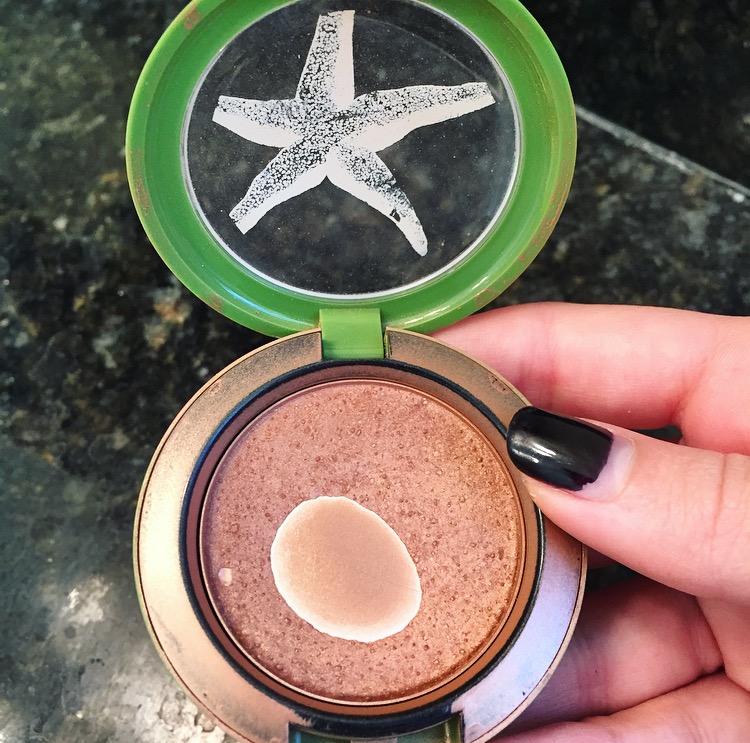
Just a little blush can bring life to someone’s face, so I usually just add a few swipes to my cheekbones. Occasionally I’ll omit this one {but never when I’m sick and look ghostly}. The blush pictured above is from MAC in the shade “Get-Away Bronze.”

(6) Brow Powder

FullSizeRender 19

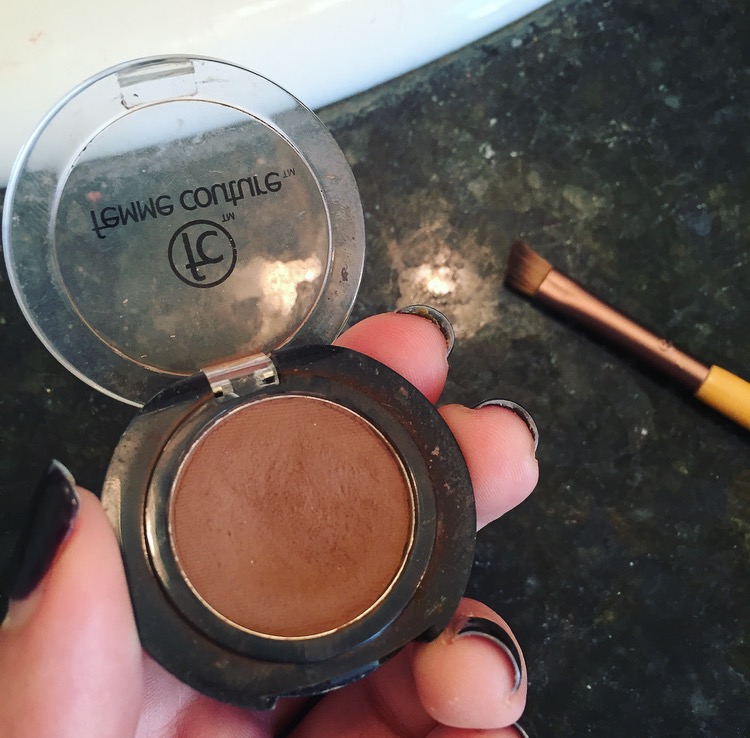
The finishing touch to my makeup routine is to fill in any parts of my brows that are a little sparse. I prefer a powder to a pencil because I think it looks a little more natural, and I like Femme Couture’s Perfect Brow Powder.


Well, that’s it! It takes me 5 minutes to achieve the natural {but still professional} look below.

IMG_6037


Screen Shot 2015-10-12 at 8.12.23 PM

5th Grade Coping Skills Lesson

Screen Shot 2016-01-18 at 6.32.55 PM

At my school, the jump from 4th grade to 5th grade is a big one. Middle school students switch between classrooms, have more difficult coursework, are responsible for their own laptops at school, and are dealt a significantly bigger pile of homework every night. Once you add on the increase of girl drama, insecurities, and typical social woes of being a pre-teen, it’s no surprise that this is a stressful time for these children. As a continuation of my 4th grade coping skills cube lesson, I teach my 5th graders stress management techniques that they certainly need with all of the added stress of adjusting to life as a middle school student.

To begin my lesson, I induce feelings of stress in the students so that those emotions are fresh as we delve into our discussion. Last year, I presented this lesson during the time of year the 5th graders were learning about and writing research papers. That particular class had a very difficult time with the research process, so I used that very real example in my lesson. I started off that year’s lesson by saying, “Before we begin, Mrs. Austin wanted me to remind you that you need 6 more sources for your research paper by the end of the day today.” {Which they didn’t}. Of course the whole class freaked out at that moment, to which I responded, “So, today, we’re going to be talking about STRESS.” Most of the students calmed down once they realized what I had done, but it still took a little explaining for all of them to understand they didn’t really need more sources for their papers  😛

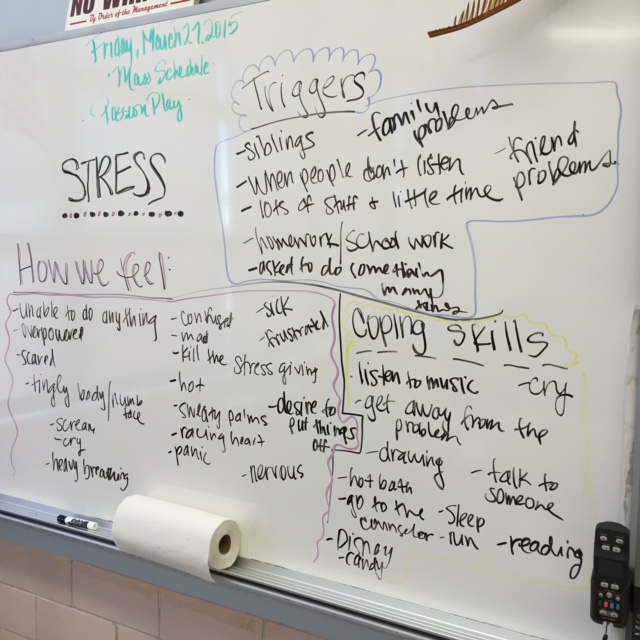
I ask the students to hold onto the feeling they experienced when I told them about their fake research assignments as we talk about stress and coping skills. Using the board, I write the following categories: “How We Feel,” “Triggers,” and “Coping Skills.”

We go through the physical signs of stress, the different triggers of stress for those students, and ways they can deal with stress when it arises. I write all of their responses on the board.

IMG_3265

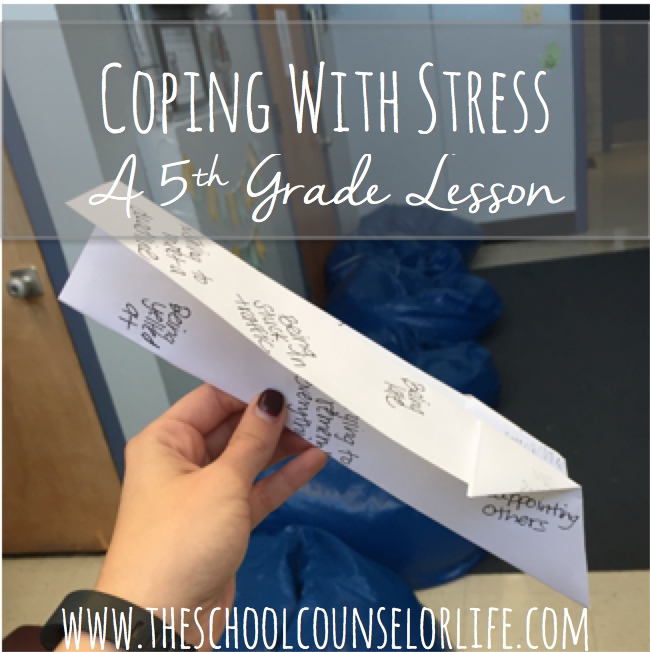
After our discussion, I have the students write everything and anything that causes them stress on a blank piece of paper. When everyone is done, we all fold our papers into airplanes and take turns throwing them in the trashcan. I have to say, even as an adult, doing this activity really helped me feel a little calmer and at peace.


I end the lesson by taking the students through a guided meditation. I tell them to close their eyes and get in a comfortable position {which may include lying on the floor} as I turn out the lights and read from this meditation script.

I feel like the students really responded to this lesson, and I even had kids tell me when they reached 6th grade that it still helps them to make paper airplanes with their stressors to either rip or throw away.

Screen Shot 2015-10-12 at 8.12.23 PM

How I Schedule Sessions With Students


Screen Shot 2016-01-08 at 3.39.03 PM

When students are in crisis, of course I shuffle around any meetings or appointments so that I can attend to the student(s) in need. However, for students who want to talk to me without any immediacy and who do not want to miss any core classes to do so, I have a system in place to schedule individual sessions during the week.

Keep in mind that I have plenty of walk-ins, but as the only counselor at my school, scheduling students tends to make things run much smoother. I’ve also found that many students would rather make an appointment with me than constantly stalk my office hoping to find me at a time that I am not with a student, in a classroom, or in a meeting.


Referral System

I’ll start off by sharing the ways my students can refer themselves to individual counseling.

Lower School

In the lower school (which is housed in a separate building from my office), there are a few ways that students can make an appointment to see me. Most of the lower school students tell their teachers that they would like to meet with me; then the teacher e-mails me the child’s request. This is helpful in the scheduling process because I already have a line of communication open with the teacher to ask for the best time to pull the student.

Lower school students can also simply ask to make an appointment with me when they pass me in the halls or see me at recess. {After which I immediately hurry back to my office and write it down because I can never seem to remember anything anymore!}

Middle School

Middle school students have a few additional ways to refer themselves to counseling. Since I am in the same building as the middle school {and directly across from the only water fountain in that hallway}, I tend to get a lot of foot traffic outside of my office. Most middle school students will stop by my office to schedule an appointment on their way to get water or on their way to class. If there is not a pressing issue, and especially if they are adamant about not missing time in core classes, we agree on a time to meet during recess, lunch, or a specialist {i.e. library, music, study skills, etc.}.

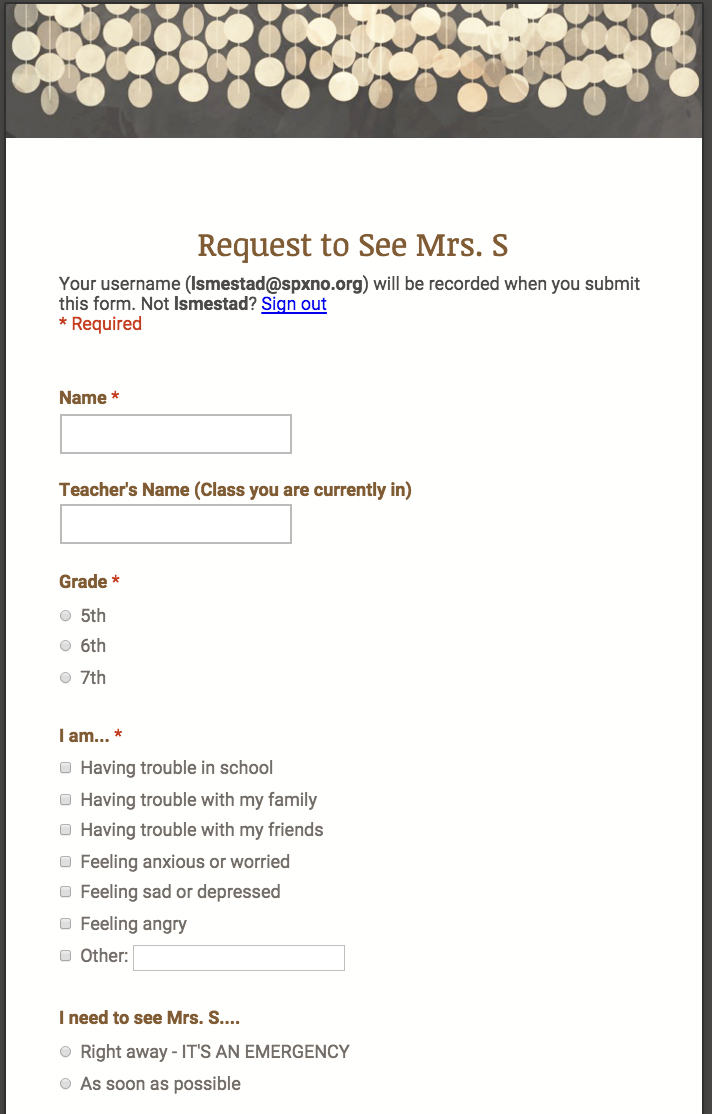
Middle school students can also fill out a referral form in person or online. I have paper referral forms directly outside my office door that students can fill out and slide under my door if I am not available, and middle school students have access to the same form on Google docs {which is great for the students who don’t want others to know they’ve requested to see the counselor}.


IMG_5707 Screen Shot 2016-01-08 at 3.43.23 PM


Another reason I make appointments with the middle school students {other than it makes life easier} is that I think it builds responsibility for students to make and keep appointments. If a student forgets, I will go get him/her from class, but most of the time my students remember their appointment times and show up for their sessions.


Keeping Track of It All

With 500 students and 1 counselor, the list of students I need to meet with per week is a long one. Having a system to keep track of these students is crucial for me to ensure no one slips through the cracks.

Throughout the week, I keep a running list of the students I’m supposed to see in my to-do list notebook. Each time I have a session, I cross a child off of my list {which is such a nice feeling!}

IMG_5706-2

I also keep a weekly calendar to keep track of all of my student appointments, parent meetings, classroom lessons, etc. I would be TOTALLY lost without this.

IMG_5704

Every time I make an appointment with a student {or retroactively after I see a student}, I write his or her initials and grade level next to the time of the session. This system helps me visualize and organize my days, and it is also a great way for me to keep track of case notes. After I finish my notes for a session, I put a check mark over the child’s initials to indicate they are completed. I also do this after I write notes for parent meetings and phone calls and after I present a lesson to a class. Check marks just make me feel as if I’ve accomplished something, so it is also motivation to get to my case notes in a timely manner.


FullSizeRender 10-2

Of course a big part of the school counselor job is being flexible, so I always write my appointments in pencil so that they can change as the needs of my school change.


How do you schedule your students? Comment below with your ideas!


Screen Shot 2015-10-12 at 8.12.23 PM

Counselor’s Corner: My Presence in the School Newsletter

Screen Shot 2016-01-05 at 4.37.08 PM

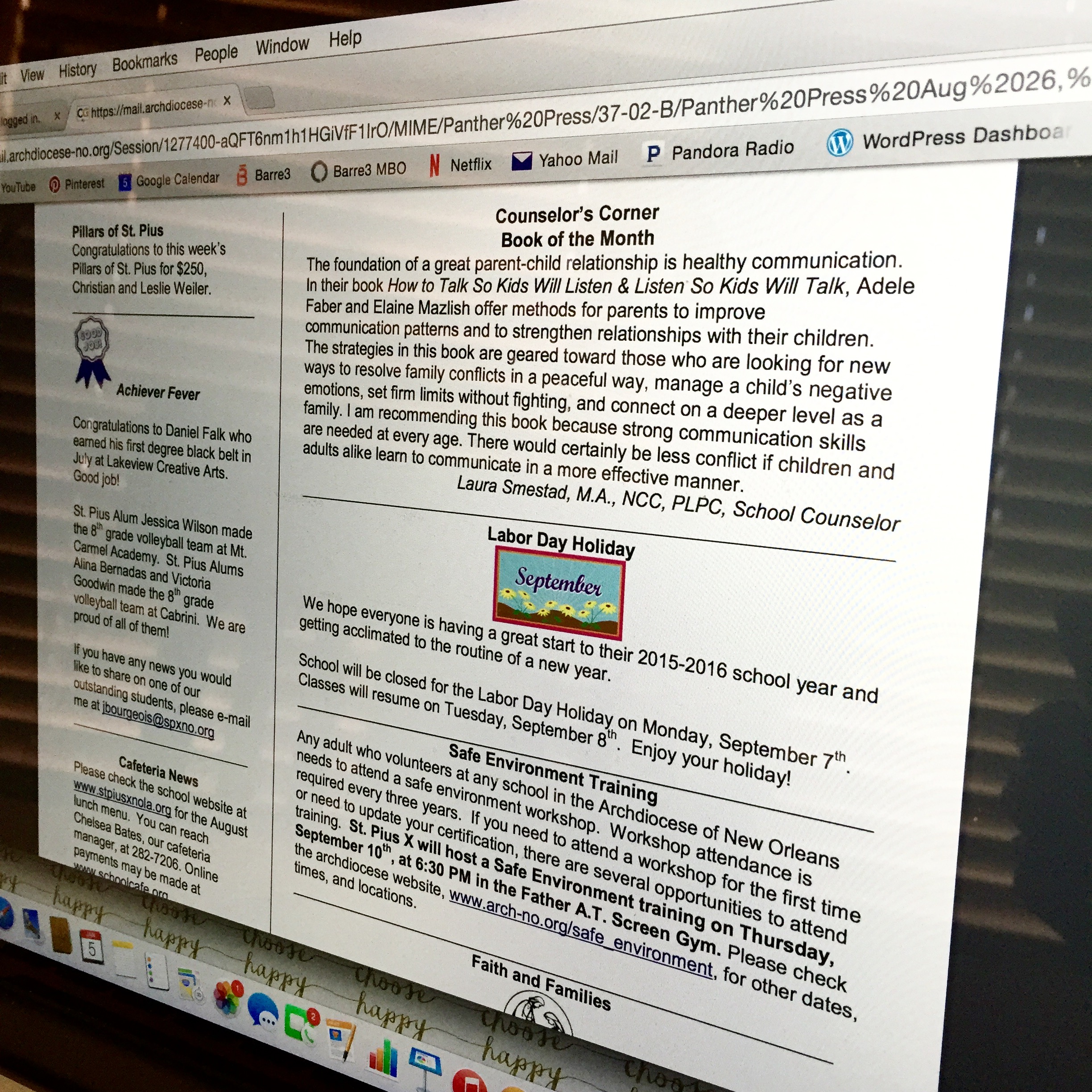
Every week, my school e-mails a newsletter to all parents/guardians to keep them informed of school activities, deadlines, and any other information they need. As you know if you’ve read my post about carpool duty, I am a huge believer that a school counselor should be visible on campus. I wanted to have a presence that extended off campus as well, so I decided to begin my own column, which I call “Counselor’s Corner,” in the school newsletter.

Comprehensive school counseling programs are designed to reach every single student, not only those with problems, which is a reason we implement large group classroom lessons. So, why not extend the same logic to the parents? Through my “Counselor’s Corner” column, I reach every parent who reads the newsletter, not just those I help with a problem. The parents know who I am even if we have never personally met, and they are reminded every week that there is someone at school to assist them and their children.

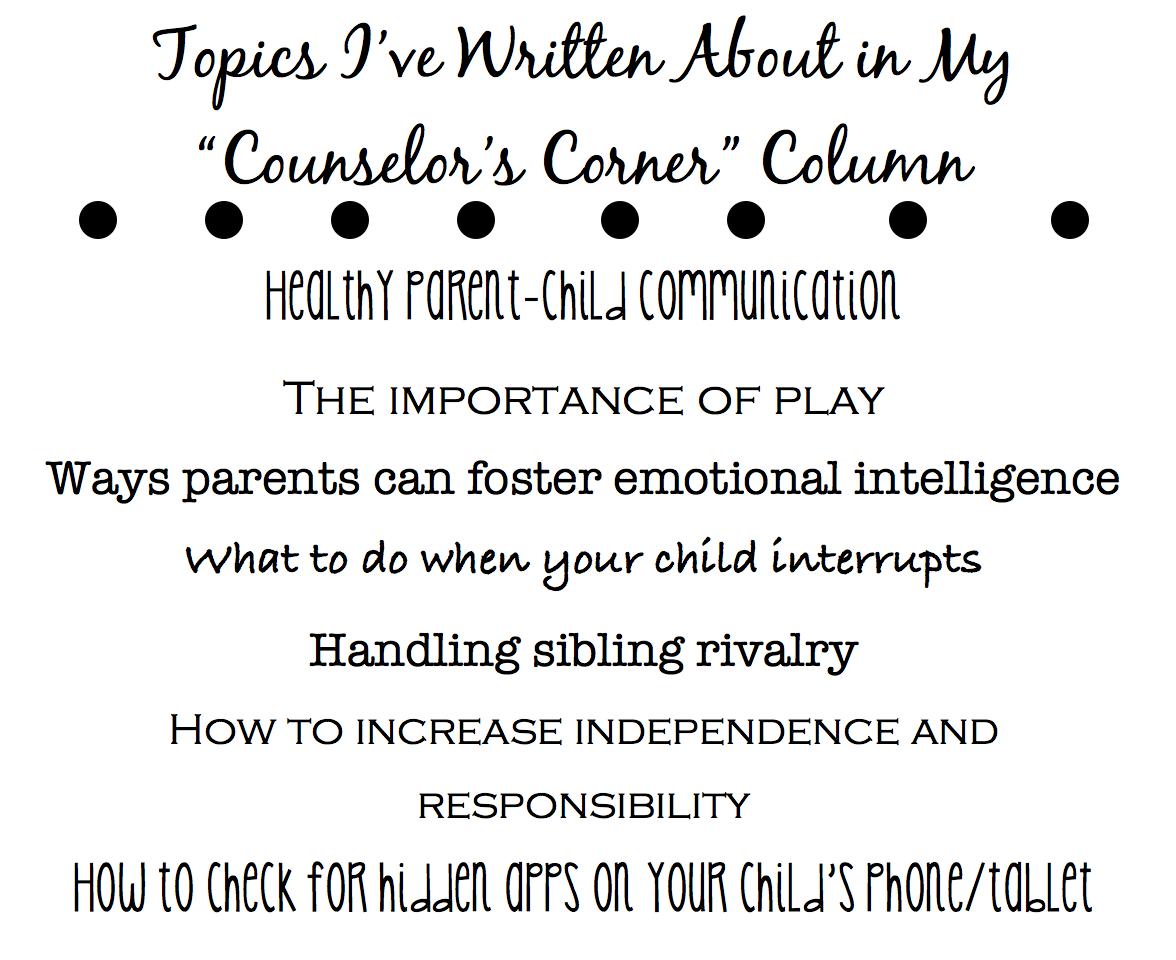
Sometimes I pull ideas and quotes from parenting articles, other times I give book recommendations, but my writing is always geared toward things that are beneficial for parents to know. Here are some topics I’ve included in this year’s “Counselor’s Corner” column:

Screen Shot 2016-01-05 at 5.15.57 PM

I often relate my pieces back to what I am doing with the children at school so the parents stay informed and can reinforce important concepts at home. For example, this month, I am doing lessons on bullying and kindness in the lower grades and cyberbullying and cyber safety in the middle grades. My newsletter columns this month are about teaching empathy to children, keeping kids safe online, and the differences between bullying and normal peer conflict. The parents and children receive a lot of the same information with the same vocabulary in hopes that they will talk about these things at home.

FullSizeRender 13


I constantly receive positive feedback about this piece of my counseling program. Almost every time I meet a parent for the first time, I get a comment about how much they appreciate my column in the newsletter. Even though it can sometimes be difficult to write something every week in the midst of the hustle and bustle of all of the other things I need to get accomplished, I know that the parents are happy {and sometimes even impressed} that I take the time to reach out to them on a weekly basis.

Screen Shot 2015-10-12 at 8.12.23 PM

Calm Down Box {Real and Virtual} & Calm Down Pass

Screen Shot 2016-01-04 at 4.14.47 PM


As I mentioned in my previous anger management post, I love using an anger thermometer as a tool in my individual sessions. It’s a great way for kids to measure their anger and learn how to control it. I use my own variation of this anger thermometer from One Stop Counseling Shop:

angerthermonestop

Read my post here to  see how I use this visual in a poster activity.

Another way I utilize the anger thermometer is to combine it with a calm down box and calm down pass.

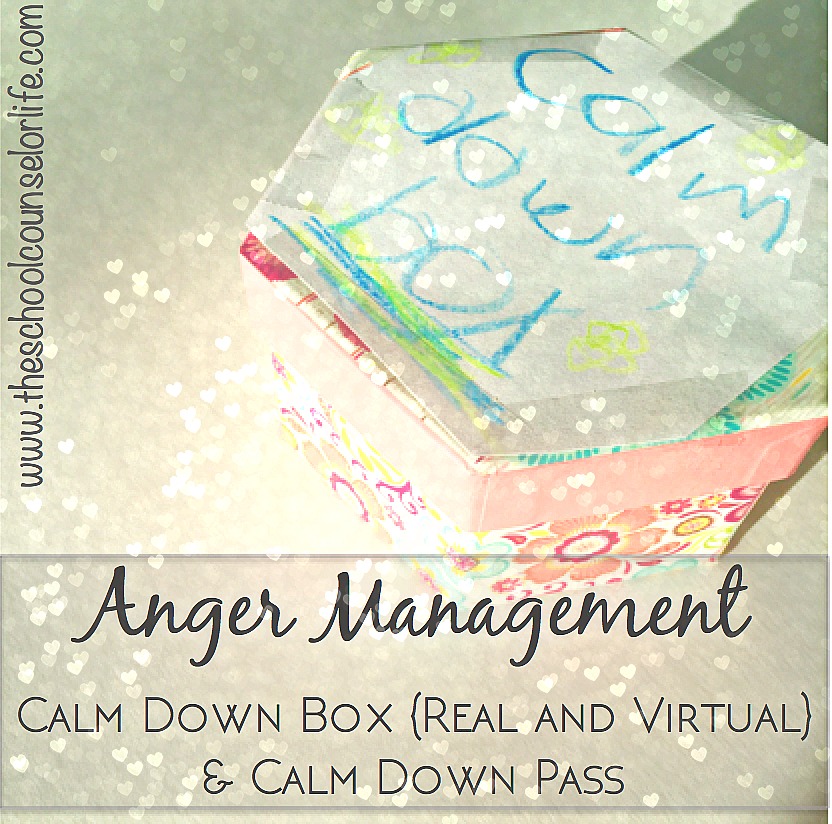
The concept of calm down box is nothing new. Having a child fill a small box with items that will help diffuse his or her anger provides a coping skill that can be used once that child recognizes the need to calm down.

Just like my poster activity, I usually spend a session or two going over the different levels of anger, and we talk about the physical and emotional signs of “being a little mad,” “being angry, “needing a break,” and “being out of control”. The student will then work on recognizing when he or she reaches the stage of “needing a break {4},” and uses coping skills {such as the calm down box} before ever reaching a level 5 {out of control}. Once that is mastered, the student works at stopping at a 3, then a 2, each time doing something to diffuse the anger before it gets out of hand.

FullSizeRender 11

Last year, I worked with a 1st grader who was having anger outbursts in the classroom and at home, and she LOVED making and using the calm down box. However, she felt uncomfortable taking the box out of her desk in front of her classmates, and she identified being embarrassed to ask her teacher if she could go into the hallway for a break {this had already been arranged with the teacher as an option}. After a little contemplation, I came up with the idea of a calm down card to go with her calm down box. I made a small card that said “I need a break,” laminated the card, and discussed my idea with the 1st grade teacher.

FullSizeRender 12

We agreed that the student could simply hand the teacher the card any time she needed to with no questions asked. The teacher kept the student’s calm down box in a cubby next to the door {at the student’s request}, so that it could easily be taken into the hallway after the card was presented. Then, she was allowed 5 minutes to look through her box and compose herself in the hallway right outside of the classroom.

This arrangement worked beautifully for this particular child. This technique, paired with counseling sessions, helped her learn to control and properly express her anger. As a result, her conduct grade drastically improved, and she was no longer having those outbursts of anger at home or at school. It’s amazing how even 6 year olds can build up their coping skill set and see so much change within themselves!


Virtual Calm Down Box

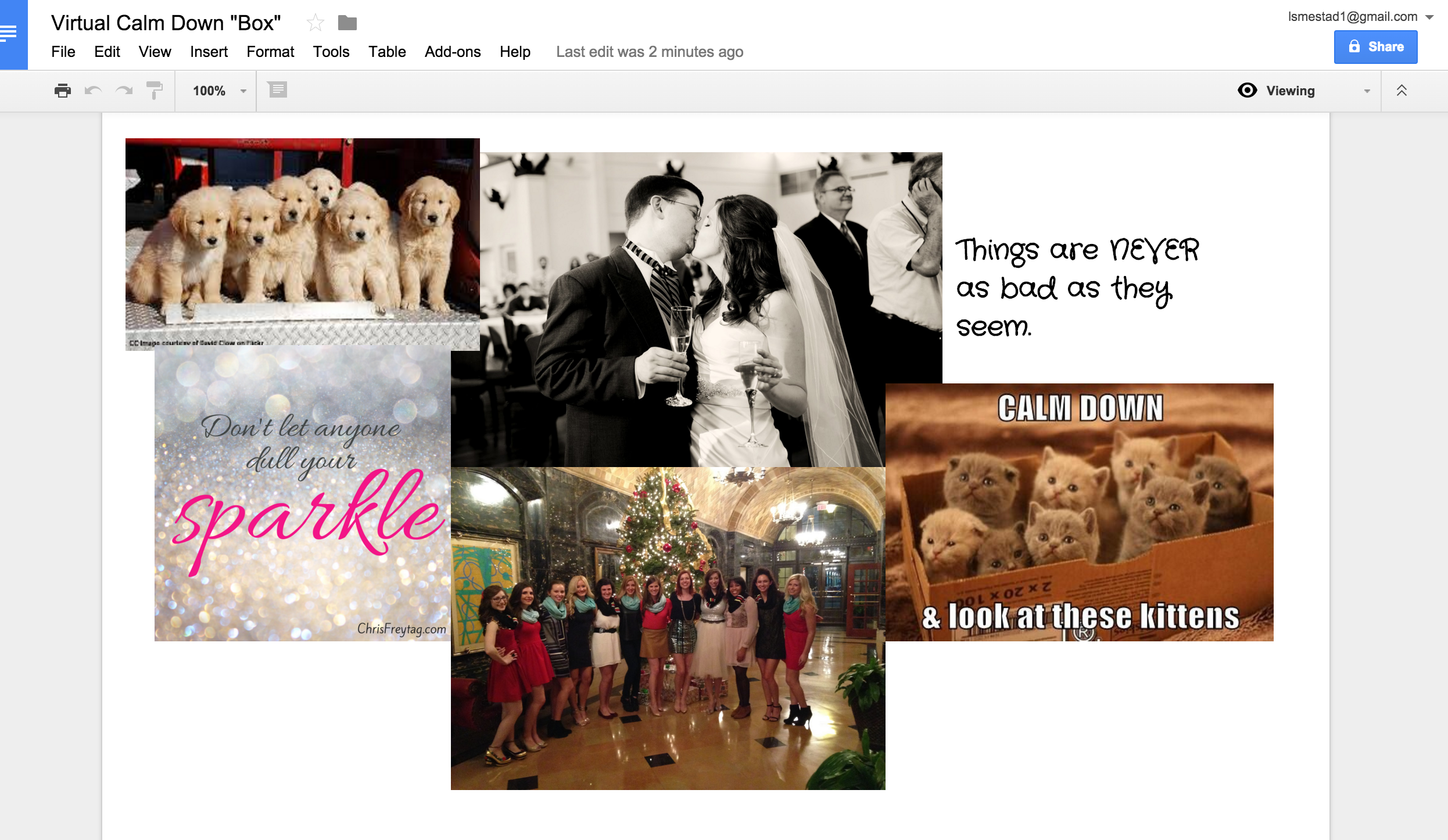
Screen Shot 2016-01-01 at 3.30.59 PMMy own virtual calm down “box”

I’ve had older students who, for obvious reasons, did not want to carry a calm down box with them to class, so instead they made virtual calm down boxes. In order to do this, a student will create a document on Google docs with things that will calm him or her down. Since the file is in Google docs, the student can access it from any school computer and also at home. This year, grades 5-7 in my school went 1:1 with Chromebooks, so my middle school students can even open the document on their laptops whenever they need to use that coping skill. Pretty cool, right?

Well, that’s all I have for now. I hope some of these techniques help you in working with your students!


Screen Shot 2015-10-12 at 8.12.23 PM