Career Lesson Series Part V: Borrowed Career Lessons

Screen Shot 2016-06-26 at 8.32.32 PM

Welcome to the final post in my career lesson series! If you missed the first 4 parts, worry not! Links are below.

Career Series Part I: Job Portraits

Career Series Part II: Personality & Career Choice

Career Series Part III: Career Gender Stereotyping

Career Series Part IV: Career Research


Since I’ve already written about the lessons I implement with 2nd, 5th, 6th, and 7th grade, you may be wondering about the lessons I use with my 1st, 3rd, and 4th graders. Those career lessons have been borrowed from other bloggers and are wonderful! Unfortunately, I was unable to find the original source for my 4th grade lesson because the link I have is now password protected, but I will still be sharing my borrowed 1st and 3rd grade career lessons!

1st Grade – Career Bingo

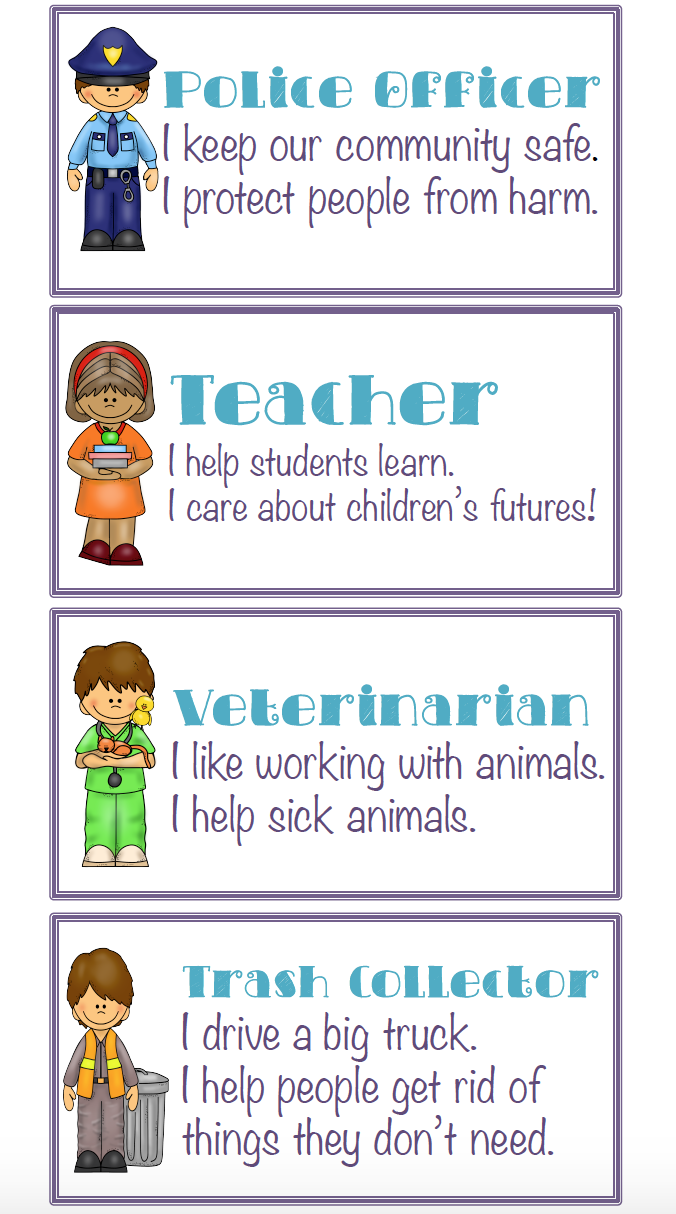
For my 1st grade career lesson, I use these bingo cards from Counselor Keri’s TPT Store.

Screen Shot 2016-06-30 at 2.20.17 PM

We start off by talking about careers, then we play the bingo game. One of the first questions I always get is “Mrs. S, what do we get when we win bingo?!?” I tell the students, “You get something very exciting! When you get bingo for the first time, you can tell the whole class what you want to be when you grow up!” *Cue excited gasps from the 1st graders* {If only things like that worked in middle school.}

Screen Shot 2016-06-30 at 2.20.30 PM

As each career is called out, we talk a little about what someone with that career actually does.
Screen Shot 2016-06-30 at 2.23.04 PM

We play bingo until all of the careers have been called out and until every student gets blackout {so they keep the markers on their cards all the way through, but they only call out for their first time getting bingo}. Once the last career is called out, we do a 30 second “blackout bingo dance” as a class {aka the cutest thing ever to watch little 7 year olds dance their hearts out….sadly, some have better moves than I do on the dance floor.}


3rd Grade – Career Jeopardy

As I write this post, I am realizing that I didn’t exactly borrow this lesson from someone else, but rather I found the Career Jeopardy Game on Pinterest and incorporated it into my own lesson. Since the majority of the lesson is taken up by playing this game, I will give all credit to Minot Career and Technical Education. You can find a link to the game here.

This is probably my most popular career lesson. The 3rd grade students truly enjoy playing Jeopardy, and I even have 4th and 5th graders ask if they can play it again! In this career game, all of the Jeopardy categories are amounts of education or training needed for careers.

Screen Shot 2016-06-30 at 2.04.03 PM

Just like with regular Jeopardy, the questions gets harder as the dollar amount increases. Also, as with regular Jeopardy, I have the students answer in the form of the question, and if they forget to say “What is…?” they actually lose the points/”money” {which makes them more aware of their words and the way they say things}.

The great thing about this game is that is has a mixture of traditional and non-traditional career choices, which means that students learn more about careers they have heard of and careers they never new existed.


Well, that’s a wrap, folks! This career lesson series is now complete, and I hope you enjoyed it! Thanks for reading!


Screen Shot 2015-10-12 at 8.12.23 PM

Career Lesson Series Part IV: Career Research

Screen Shot 2016-06-26 at 8.31.58 PM


Career Lesson Series Part I: Job Portraits

Career Lesson Series Part II: Personality and Career Choice

Career Lesson Series Part III: Career Gender Stereotyping


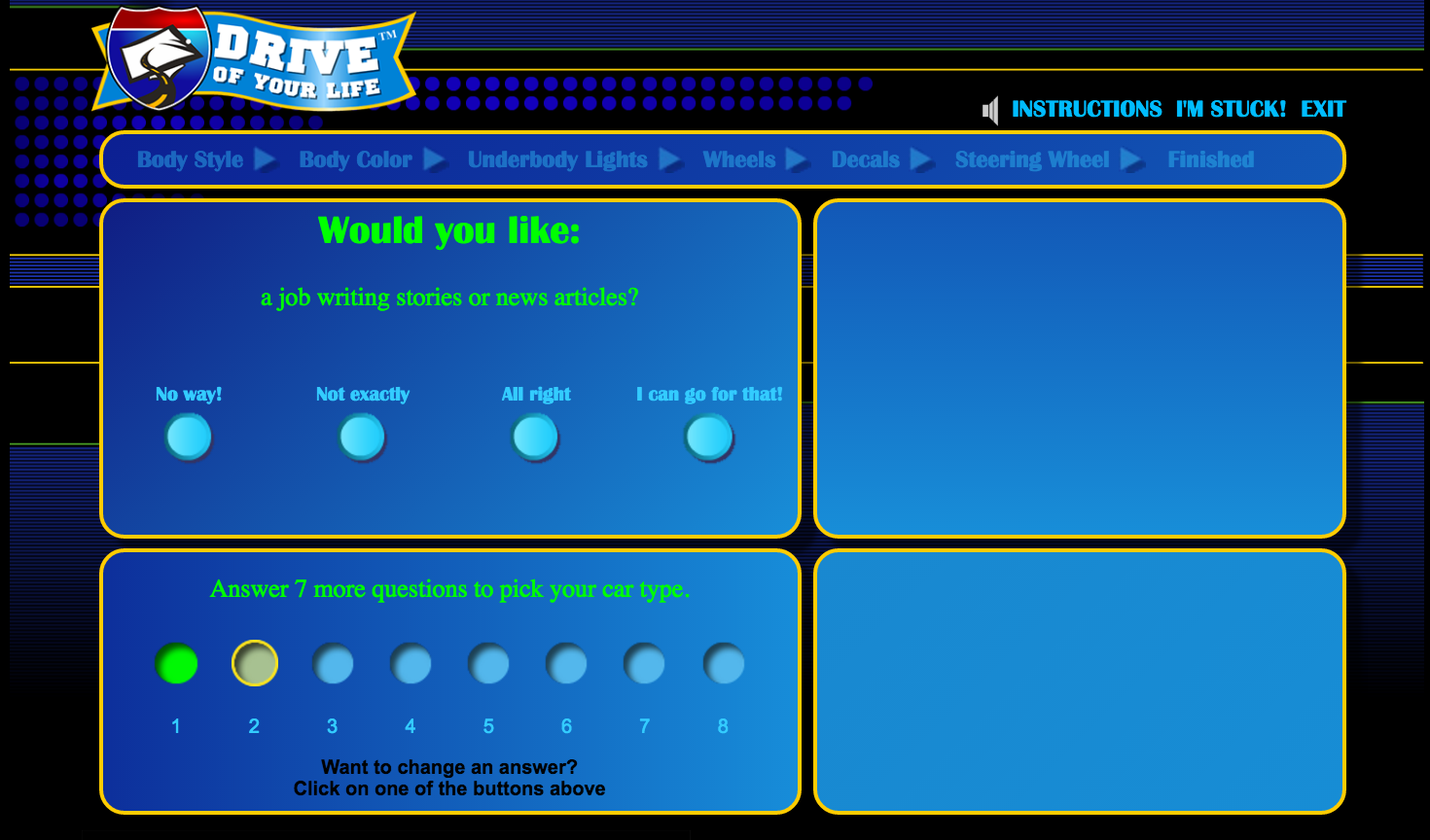
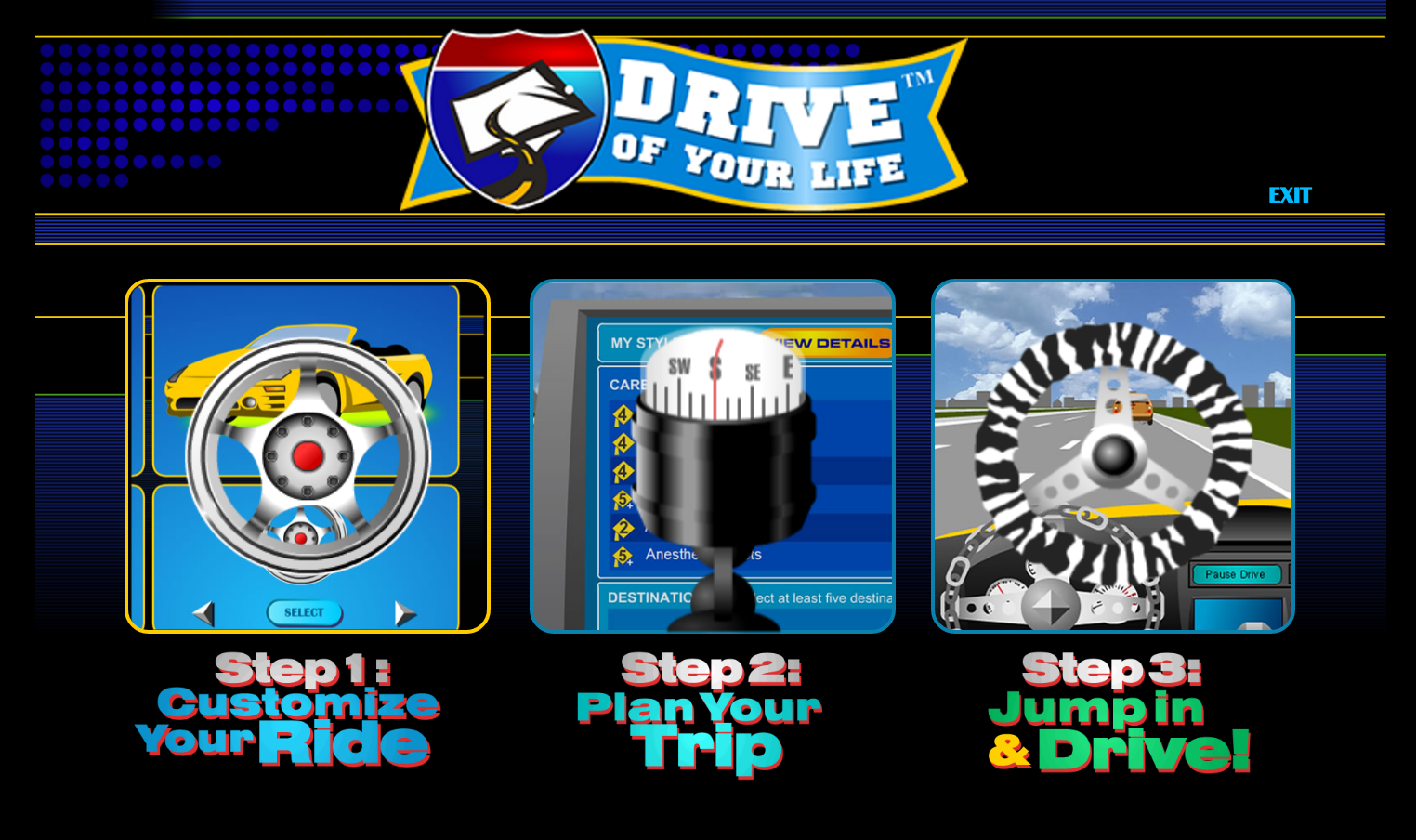
Before my 7th graders leave for high school, I want them to have one more tool in their career toolboxes…how to find more information on careers. In order to achieve this, I use the online game Drive of Your Life.

Screen Shot 2016-06-30 at 1.15.45 PM

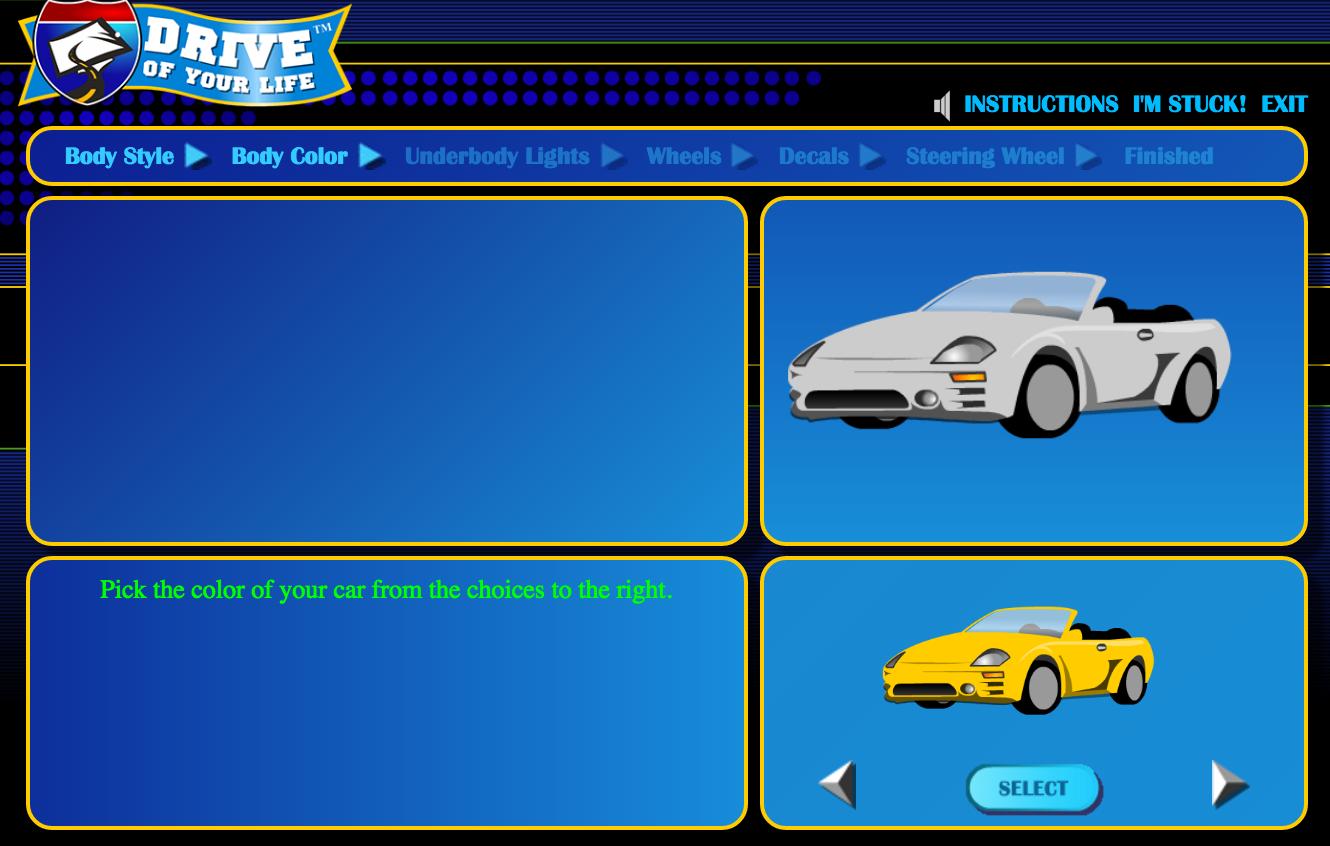
In this game, students are asked questions about the things they like and the types of tasks they would be interested in doing as part of a career. For every group of questions answered, students get to design a piece of their car in the game.

Screen Shot 2016-06-30 at 1.16.11 PM

Screen Shot 2016-06-30 at 1.17.14 PM

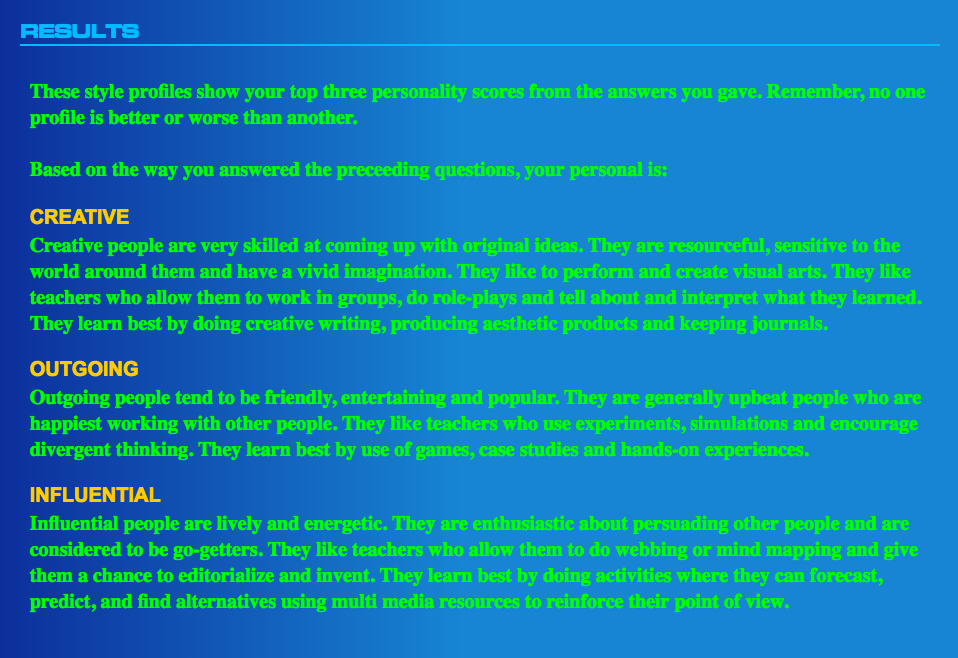
Once all questions have been answered, each student receives a breakdown of his/her top 3 personality characteristics.

Screen Shot 2016-06-30 at 1.26.13 PM

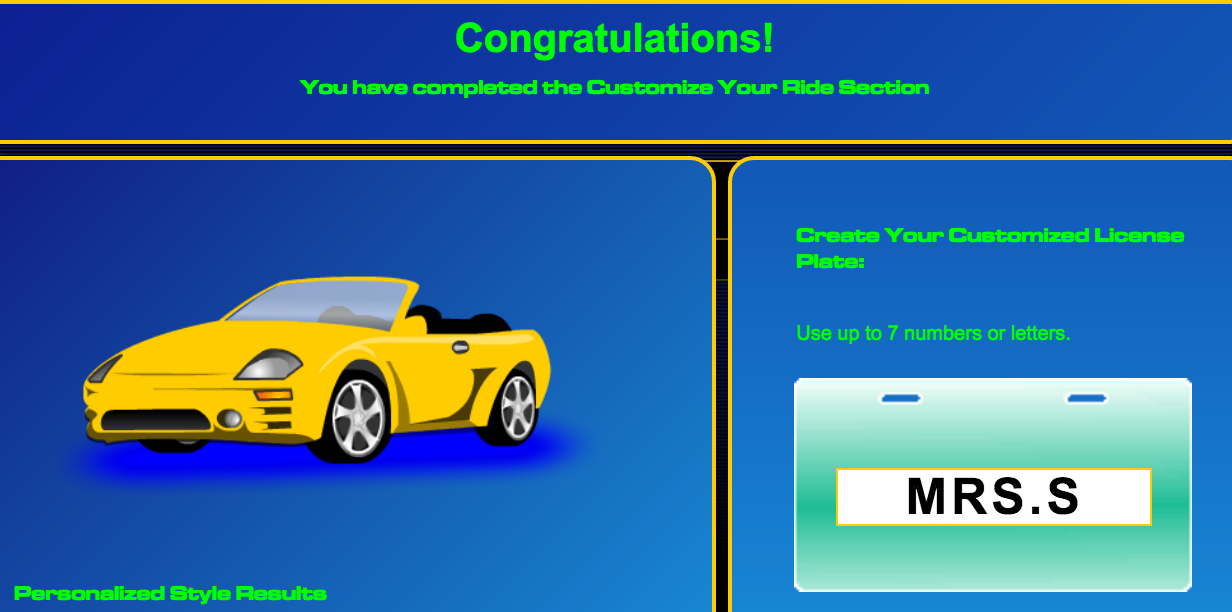
Students then get to choose their own license plate before heading to the career research section of the game.

Screen Shot 2016-06-30 at 1.26.42 PM

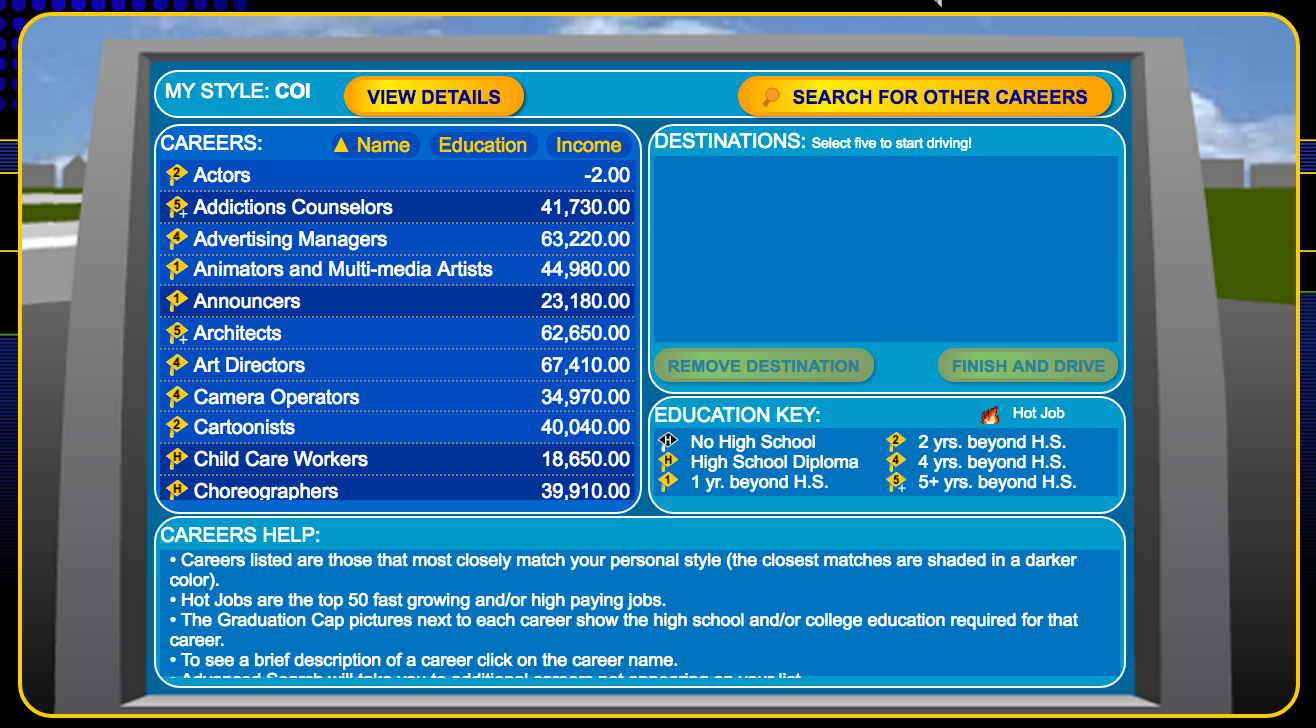
Based on the questions answered earlier, students are provided with a list of careers that may interest them. They can also search for careers that are not on the recommended list.

Screen Shot 2016-06-30 at 1.27.02 PM

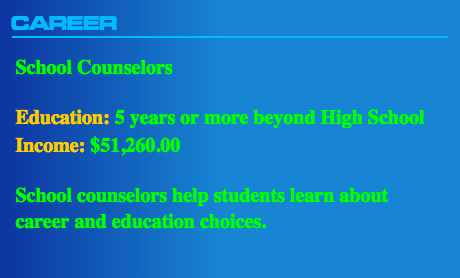
They are then prompted to choose their top 5 career choices, which will be the interstate exits on their “drive.” Before choosing, students can click on careers for a brief synopsis.

Screen Shot 2016-06-30 at 1.32.51 PM

Screen Shot 2016-06-30 at 1.34.11 PM

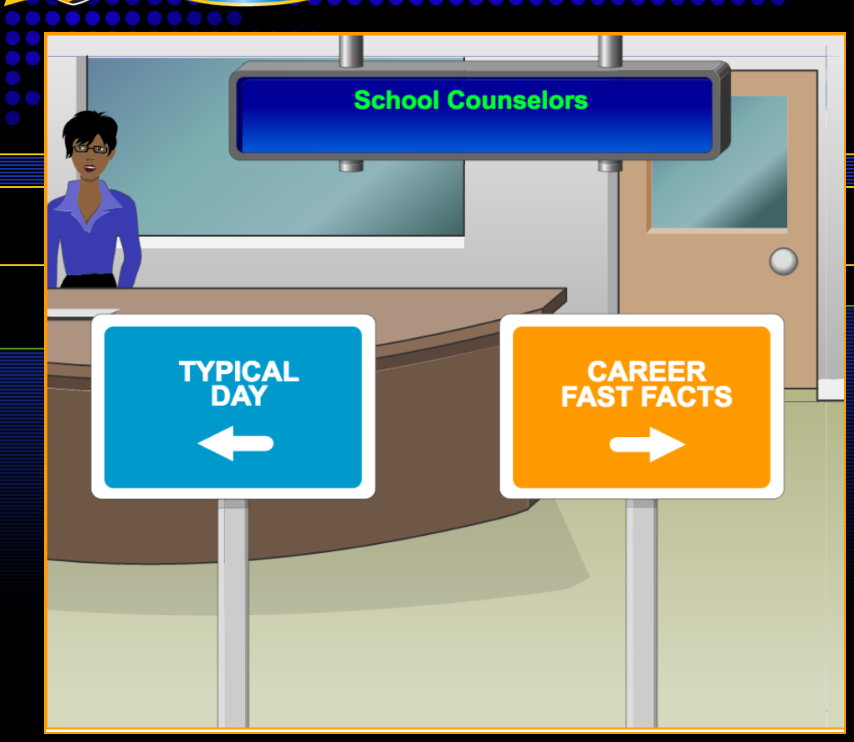
Once they “drive” to a career, students can explore that career much more thoroughly, finding information on education requirements, work hazards, daily tasks, etc.

Screen Shot 2016-06-30 at 1.34.41 PM


I let the students research different career choices on Drive of Your Life until the last 15 minutes of class. Then, we come back as a group, and they get a chance to share with their classmates any interesting things they learned about careers.

My 7th graders really seemed to enjoy this game, and I think it is a wonderful introduction to researching information on careers.


Tomorrow’s post will be the last in this career series and will focus on my borrowed career lessons!

Career Lesson Series Part V: Borrowed Career Lessons


Screen Shot 2015-10-12 at 8.12.23 PM

Career Lesson Series Part III – Career Gender Stereotyping

Screen Shot 2016-06-26 at 8.30.56 PM


Career Lesson Series Part I: Job Portraits

Career Lesson Series Part II: Personality and Career Choice


I’m going to start off by saying that this is my favorite career lesson that I implement with my students, and my 6th graders seem to take a lot away from it in regards to career gender stereotyping. Although we’ve made a lot of progress as a society, gender stereotypes still influence career decisions, and this lesson makes that real for students.

Once we’ve finished our initial “what is a career” discussion, I pass out a worksheet.

Screen Shot 2016-06-26 at 9.13.30 PM

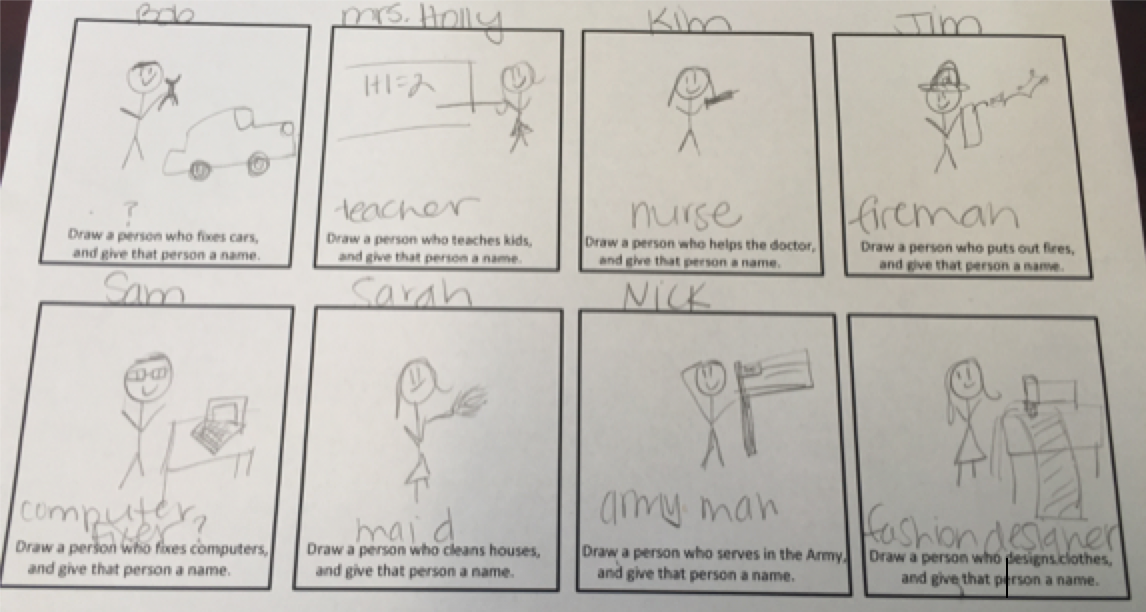
Students are instructed to write the career described in each box, draw a picture of someone who would have that career, and give that person a name. To the students, they were being tested on recognizing careers, but really they were about to demonstrate career gender stereotyping.

The careers on the worksheet are ones that are categorized by many as “jobs for men” or “jobs for women,” like mechanic, nurse, teacher, firefighter, and fashion designer. I let the students share what they came up with for each description, then for each career they raise their hands according to what gender they assign to the workers they drew. {i.e. “Raise your hand if the nurse you drew was a woman.” Literally every single hand went up.}

Screen Shot 2016-06-26 at 9.14.21 PM

After doing this a few times, the students realized what they had done, and some even looked horrified that they — the liberal, forward-thinking middle schoolers they are — had used gender stereotypes on their worksheets without thinking.

If these students were asked in everyday life, “Is a doctor a job for a man or a woman?,” they would in an instant say, “It’s a job for either! Men and women can be anything they want!” Yet, the career gender stereotypes that have been around ever since women have been in the workforce still permeate their minds unconsciously.

The “Ah-ha” moment of this lesson was spectacular to watch. Hopefully it helped at least one student not limit career choices based on his or her gender.


Only 2 more parts of this career series! Click here to check out Part IV: Career Research (a 7th Grade Lesson).


Screen Shot 2015-10-12 at 8.12.23 PM

Career Lesson Series Part II: Personality & Career Choice

Screen Shot 2016-06-26 at 8.31.17 PM


Career Lesson Series Part I: Job Portraits


In my 5th grade career lesson, I talk with my students about the different variables that might influence their future career choices. Typical responses include things like how much money they want to make, what they like to do, and what they are good at — all of which are influenced by personality.

The class completes a watered-down version of the Meyers-Briggs called the Color Quiz {check out the one I use here}.  When the quizzes are complete, students break off into groups according to their color {click here for the results segment of the color quiz}, which pairs them with others who have a similar personality type. Each group is then given a list of careers that match well with the personality types in their group to discuss. I created the lists based on this website.

Screen Shot 2016-06-26 at 9.08.46 PM


We come back together as a class to talk about the results — some think their career recommendations are spot on, and others are outraged that their lists suggest they would make good accountants. I use those examples to reinforce that there are many factors that go into choosing a career and that just because a test says they should consider a certain career, that isn’t always what they should do.

If there is time, I finish the lesson by reading the descriptions for each specific personality type {found in the results document linked above}. It really is amazing to see how well the personality types fit the children {& how well mine fits me!}.


Career Lesson Series Part III: Career Gender Stereotypes


Screen Shot 2015-10-12 at 8.12.23 PM


Career Lesson Series Part I – Job Portraits

Screen Shot 2016-06-26 at 8.31.34 PM


Even though my elementary and middle school students won’t be choosing a career any time soon, I want to make sure they get the tools and information they need to make that big decision one day. So, how do we encourage career exploration with younger students so that they can make informed choices as adults? I personally utilize classroom lessons, and today I will be sharing a career lesson I use with my 2nd grade classes.

Here is my planned schedule for the rest of this series {so you can anxiously await each post}:

Tuesday – 5th Grade Career Lesson: Personality and Career Choice

Wednesday – 6th Grade Career Lesson: Career Gender Stereotyping

Thursday – 7th Grade Career Lesson: Researching Careers

Friday – Career lessons borrowed from some of my favorite bloggers {the ones I use with 1st, 3rd, and 4th grade students}


Job Portraits: A 2nd Grade Career Lesson

I start all of my career lessons by asking the class what a career is and how a career is different from a job {i.e. careers typically require more education/training; careers are usually more long term; one can change jobs yet keep the same career, etc.}

Once that info is covered, I pass out blank paper and instruct the students to draw a portrait of themselves as what they want to be when they grow up. They are also encouraged to think of and draw any tools they mights need for that career {ex. doctor needs a stethoscope}. Here are some 2nd grade creations:

IMG_6481

IMG_6482

When everybody is done and has had the opportunity to show their creations to the class, I read the book When I Grow Up by Al Yankovic {yes, Weird Al wrote a children’s book, and it’s awesome}.

Screen Shot 2016-06-26 at 8.47.14 PM

In the story, the main character first tells his classmates that he wants to be a chef when he grow up, and then proceeds to list about a dozen other careers he wants, like tarantula shaver and chocolate mousse sculptor. The moral of the story is that kids do not have to choose a career, but rather they should explore many different possibilities. {My 2nd graders LOVE this book, btw.}

The students then turn their papers to the back and list any and every career they may be interested in. They have the chance to read their lists to the class, then we close out.


Career Lesson Series Part II: Personality and Career Choice


Screen Shot 2015-10-12 at 8.12.23 PM

My Top 5 School Counseling Blogs

Screen Shot 2016-06-20 at 11.50.13 AM


There are so many wonderful resources for school counselors on the web, so today I will be sharing my personal favorite school counseling blogs!


5. JYJ Counselor Blog

I pull a lot of classroom lesson ideas from this blog. My favorite borrowed idea from JYJ Counselor Blog is this one, which features an ice breaker using QR codes. I’ve incorporated this into my beginning of the year lessons with my middle school students, and they LOVE it.


4. Life on the Fly…A School Counselor Blog

I like that this blog touches on a little bit of everything, from individual counseling, to lessons, to parent outreach. Check out this post describing her virtual parent book club. I’ll definitely be looking into that for the coming school year!


3. Savvy School Counselor

The Savvy School Counselor blog is extremely user friendly and easy to navigate. This year, I pulled ideas for my Middle School Girls small groups from this post titled, The Girl World: A Small Group.


2. Scrapbook of a School Counselor

This blog is clean, concise, and full of excellent ideas. I can’t wait to implement this idea for Girl’s Night Out at my school.


1. Counselor Up 

This is my all time favorite school counseling blog. It is extremely professional looking, supplies tons of fresh ideas, and is easy to read. I particularly like this post about utilizing Solution Focused counseling with students.


Screen Shot 2015-10-12 at 8.12.23 PM

Using the Summer Break to Get Stuff Done: “Teacher Tuesdays” & More

Screen Shot 2016-06-13 at 12.40.34 PM


After reading my recent posts about how I use data to improve my counseling program, you can probably tell that I don’t stop working over the summer. Even though I sleep later and enjoy more time with family and friends, I make sure to dedicate part of the summer break to working on things that will make my counseling program better AND that will save me a little work during the school year.

“Teacher Tuesdays”

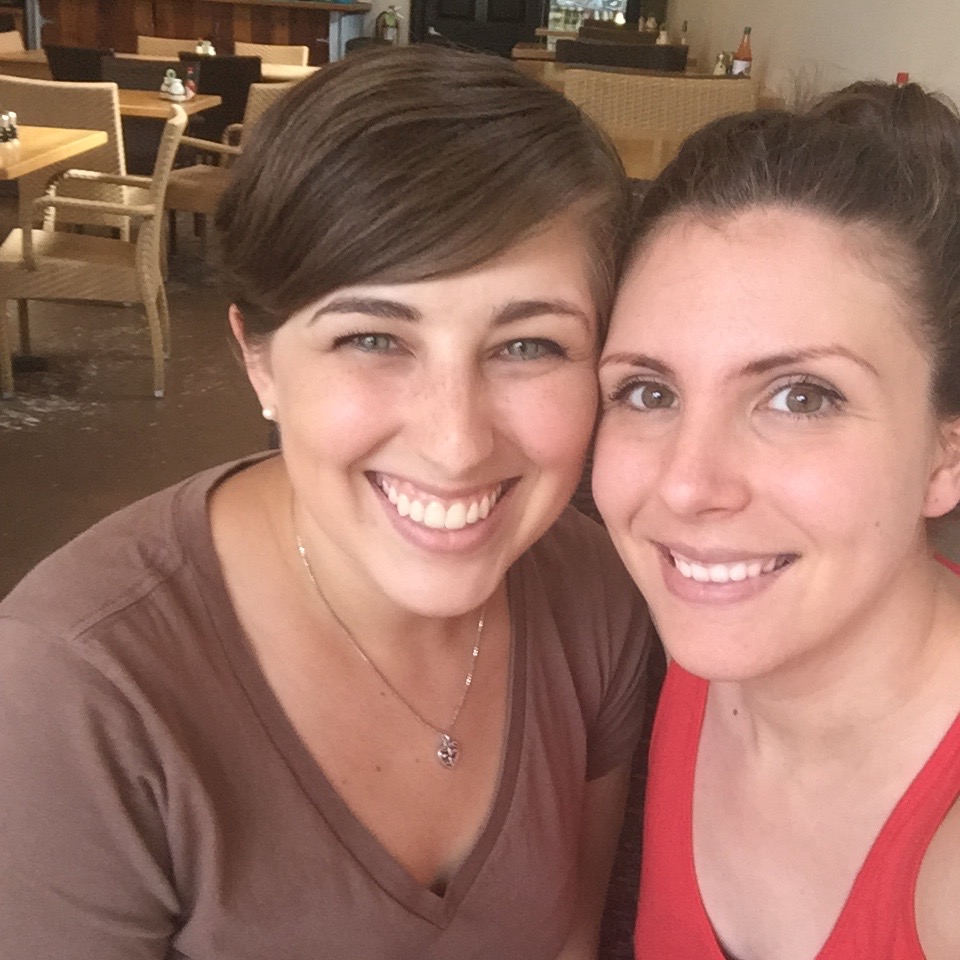
My work BFF, who is the Librarian at my current school, likes to get prep work done over the summer as well, so we began something that she has dubbed “Teacher Tuesdays.” {Even though I’m not actually a teacher, I think the name is catchy, so I’m sticking with it!} We try to get together at least once a week {usually on a Tuesday} to do work at a coffee shop. Even though we’re working separately, it is extremely helpful to have someone to run my ideas past, especially somebody who understands the culture of the school, who knows the faculty and students, and who can offer the perspective of a teacher that I may be lacking.

IMG_4151


What Gets Done?

So, what do I work on over the summer to prepare for the next school year? Basically anything that can be done ahead of time. So much of our work as school counselors is the unexpected or the things that cannot be perfectly prearranged, so I like to have as much of the planned stuff done before the school year starts. That way, I have more time to counsel students and tackle the un-planned things during the school year. Here are some examples of my summer workload:

-Evaluating classroom lessons to decide which ones to use next year and which ones to retire

-Developing new classroom lessons to replace the ones I won’t be using again

-Creating a list of topics for my weekly blurbs in the school newsletter {click here for more info on my newsletter contributions} – if I have time, I usually compose a few of them as well

-Evaluating, adjusting, and creating curriculums for my small groups

-Developing timelines for all of my small groups

-Reading articles, books, and blogs about counseling

-Creating handouts for my parent volunteer program {see more info on that program here}

-Develop ideas for {and begin to create} bulletins boards for outside of my office

-Any tasks related to new ideas for next school year


Honestly, the best thing about taking care of those tasks over the summer is that I feel more prepared and less anxious/rushed throughout the school day. For example, last year I had a particularly crazy day in which I had to tend to multiple students in crisis, an unexpected visit from a parent, and a plethora of unforeseen requests from administration, which means that I ended up not having the time I thought I would have to type up my weekly newsletter article. Luckily, I realized I had completed a few newsletter pieces over the summer, so I was able to quickly e-mail one right before the deadline. Of course it wouldn’t have been the end of the world if I had missed one newsletter, but because of the work done on the front end, I didn’t have to!


Remember, it is also important to take advantage of the time for an increase in self-care practices that the summer break provides! As school counselors, a mental and emotional recharge is definitely needed during those months. How do you spend your summer? Do you work on your program? Do you take advantage of the time to rest and laugh? Both? Comment below to share your practices!


Screen Shot 2015-10-12 at 8.12.23 PM

Needs Assessments, Evaluation Methods, & Data, Oh My! Part III: Setting & Evaluating Goals

Screen Shot 2016-06-01 at 12.56.39 PM

So far in this series, we’ve covered data collection and data interpretation, so today I will share the ways that I use my data to set and evaluate goals for my school counseling program.

Click here to view Part I: Data Collection

Click here to view Part II: Data Interpretation

My hardcore type A personality loves setting goals. As counselors, we help our clients set goals for therapy and incorporate those goals into their treatment plans, so why are we sometimes hesitant to set goals for ourselves as practitioners or for our schools’ programs? Goals give us direction and keep us from remaining stagnant – which is why they are not always easy. My work life might be simpler if I did the same exact things every year, never adding to or altering my counseling program; however, the path I have chosen to take {which definitely increases my work load}, ensures that I am bettering my program and myself as a clinician every year.

So what makes a good goal? Some of you may be familiar with the idea of SMART Goals, which means that goals should be Specific, Measurable, Attainable, Realistic, and Timely. All of these factors are important in setting goals for your school’s program.

Last year, I caught myself when I almost set a goal that was completely unattainable and unrealistic. I wanted to increase the percentage of students who reported they feel comfortable talking to the school counselor about personal things by 10%. Sounds great, right? Well, it would have been, except that the percentage of students who indicated they felt comfortable talking to me was already 93%, so in order for that to increase by 10%, I would have needed more than 100% of students to mark that on their surveys {which of course is impossible}. After I noticed that blunder, I changed my goal to a 5% increase…you know, something that was actually feasible. 😛

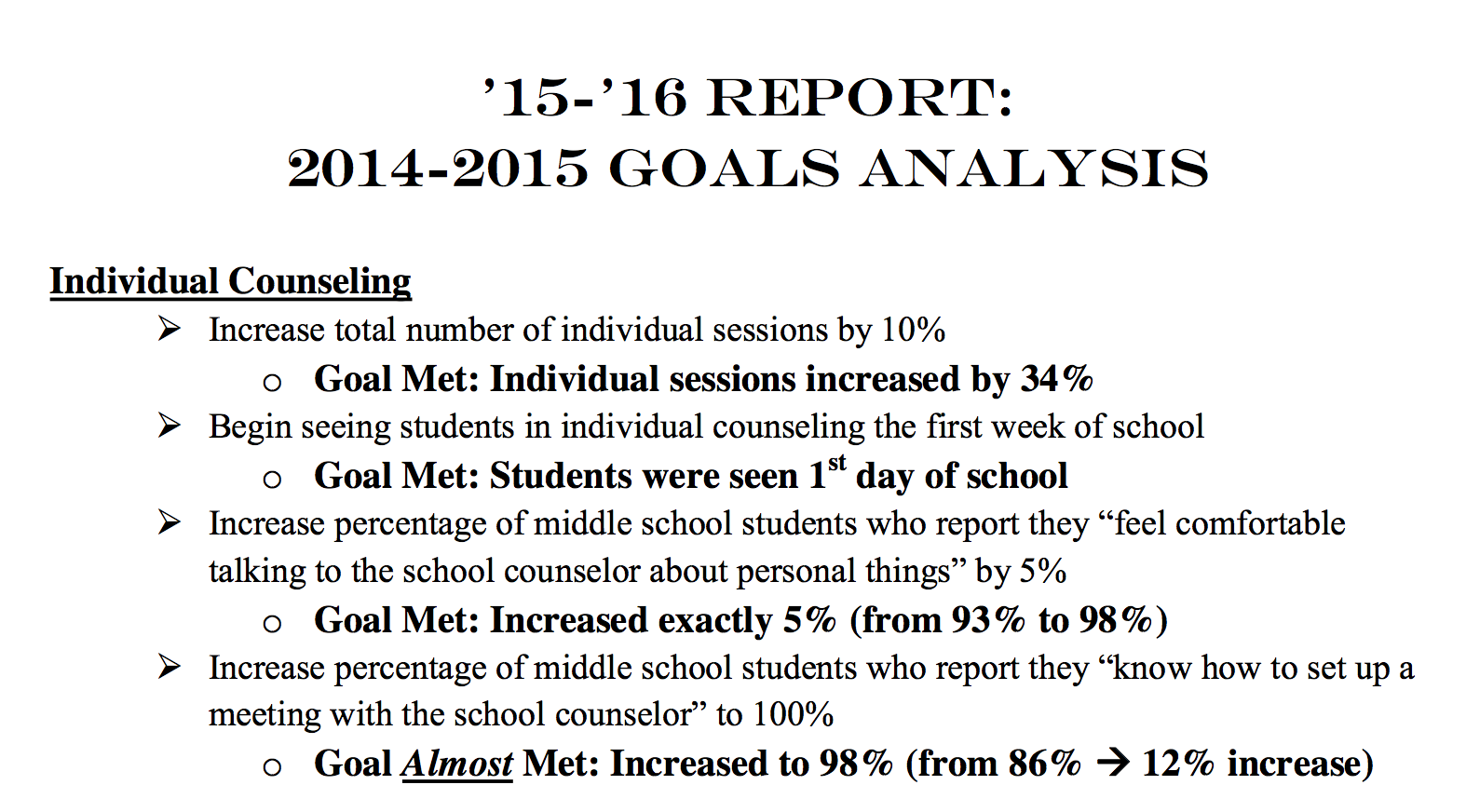
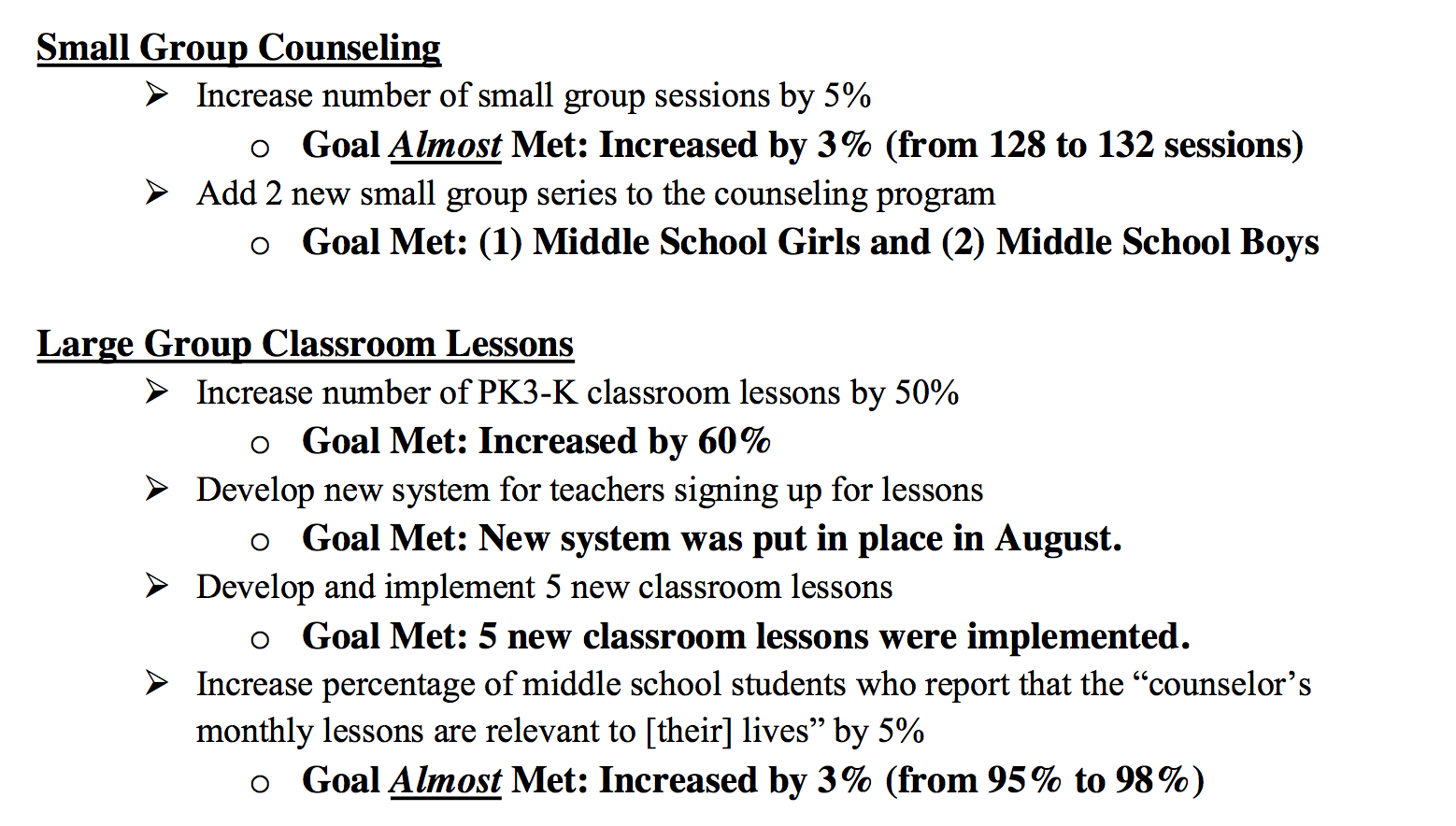
Goals don’t have to be huge. They can be small, attainable things to drive your program forward. Here are my goals from last school year {with my evaluation of each goal to see whether or not those goals were met}:

Screen Shot 2016-06-04 at 12.38.44 PM

Screen Shot 2016-06-04 at 12.38.59 PM Screen Shot 2016-06-04 at 12.39.08 PM


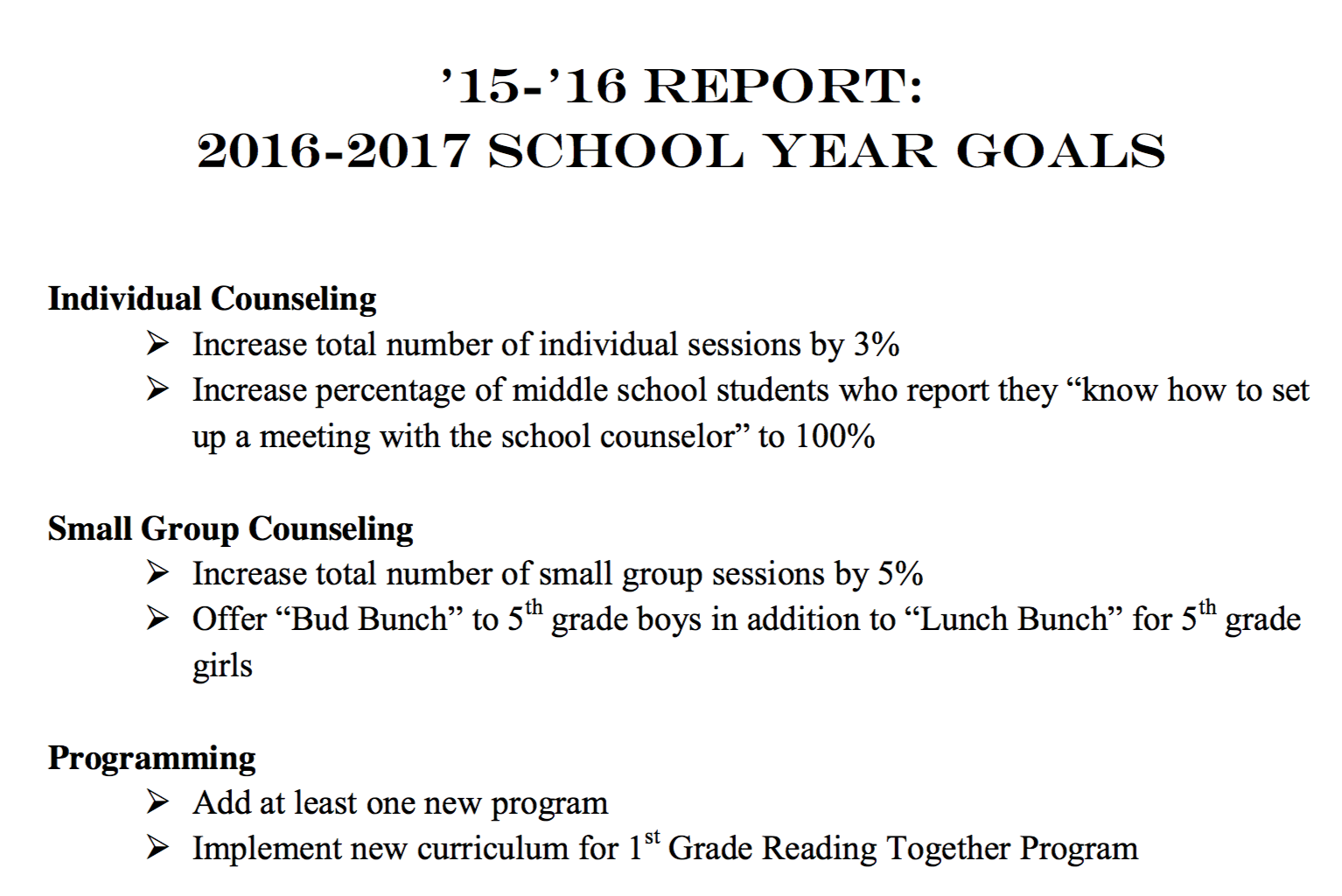
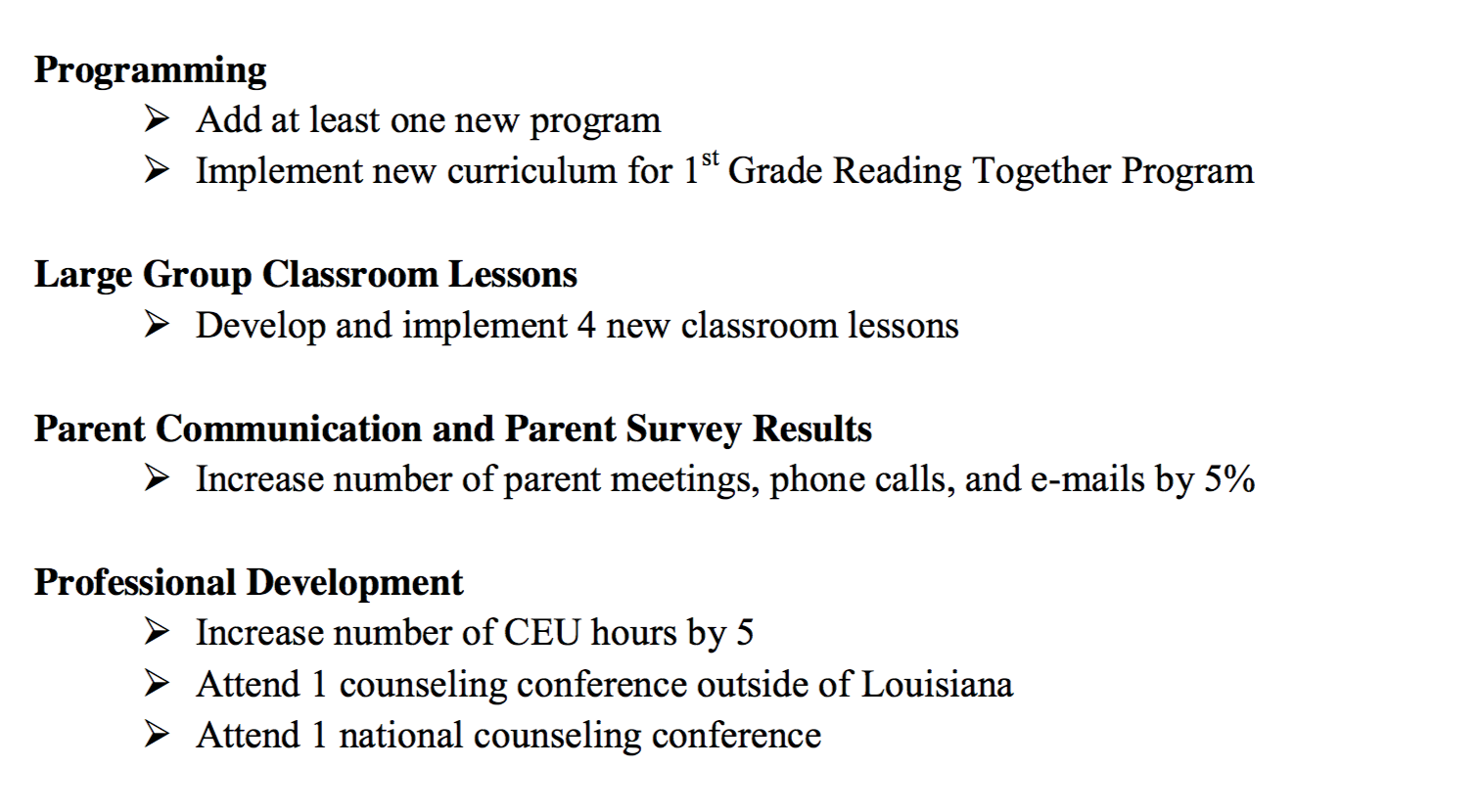
Once I evaluate my goals for the year, I immediately begin to make my goals for the following school year so that I can keep them in mind while doing some planning over the summer. Here is what I am striving to achieve by the end of next school year:


Screen Shot 2016-06-04 at 12.39.30 PM Screen Shot 2016-06-04 at 12.39.40 PM

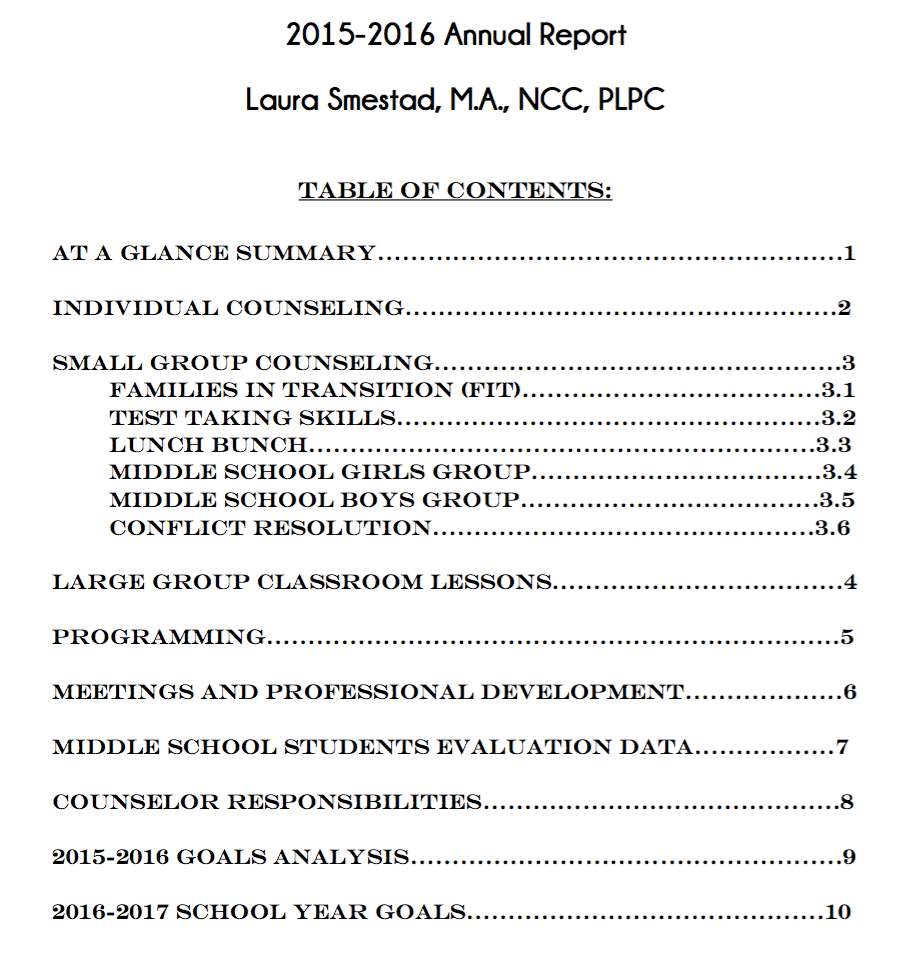
I hope this series has helped alleviate some fears associated with using data to drive a school counseling program. It doesn’t have to be a scary or intimidating thing. In fact, once you get past the math part of it {if, like me, math is not your strong suit}, it can actually be a very exciting task to undertake. The information you gather not only shows you the progress of your counseling program, but it gives your administration a better idea of what you actually do on a daily basis. At the end of every school year, I give my principal and assistant principal a copy of my annual report with all of my data, and I think this practice has helped them gain an understanding of my role while giving me the freedom to continue what I am doing {after all, there is data behind what I do to show it is working, so how can they argue with that!?}.


Screen Shot 2016-06-04 at 1.06.24 PM


Thanks for reading! If you’d like more blog posts similar to this data series, please leave me a comment or e-mail.


Screen Shot 2015-10-12 at 8.12.23 PM

Needs Assessments, Evaluation Methods, & Data, Oh My!: Part II: Data Interpretation


Screen Shot 2016-06-01 at 12.55.55 PM

In Monday’s post, I shared my methods of collecting data for my school counseling program. Continuing with part II of this series, today I will be writing about interpreting that information. {Don’t worry…it will be fun!}

Click here to view Part I of the data collection series.


Individual Sessions

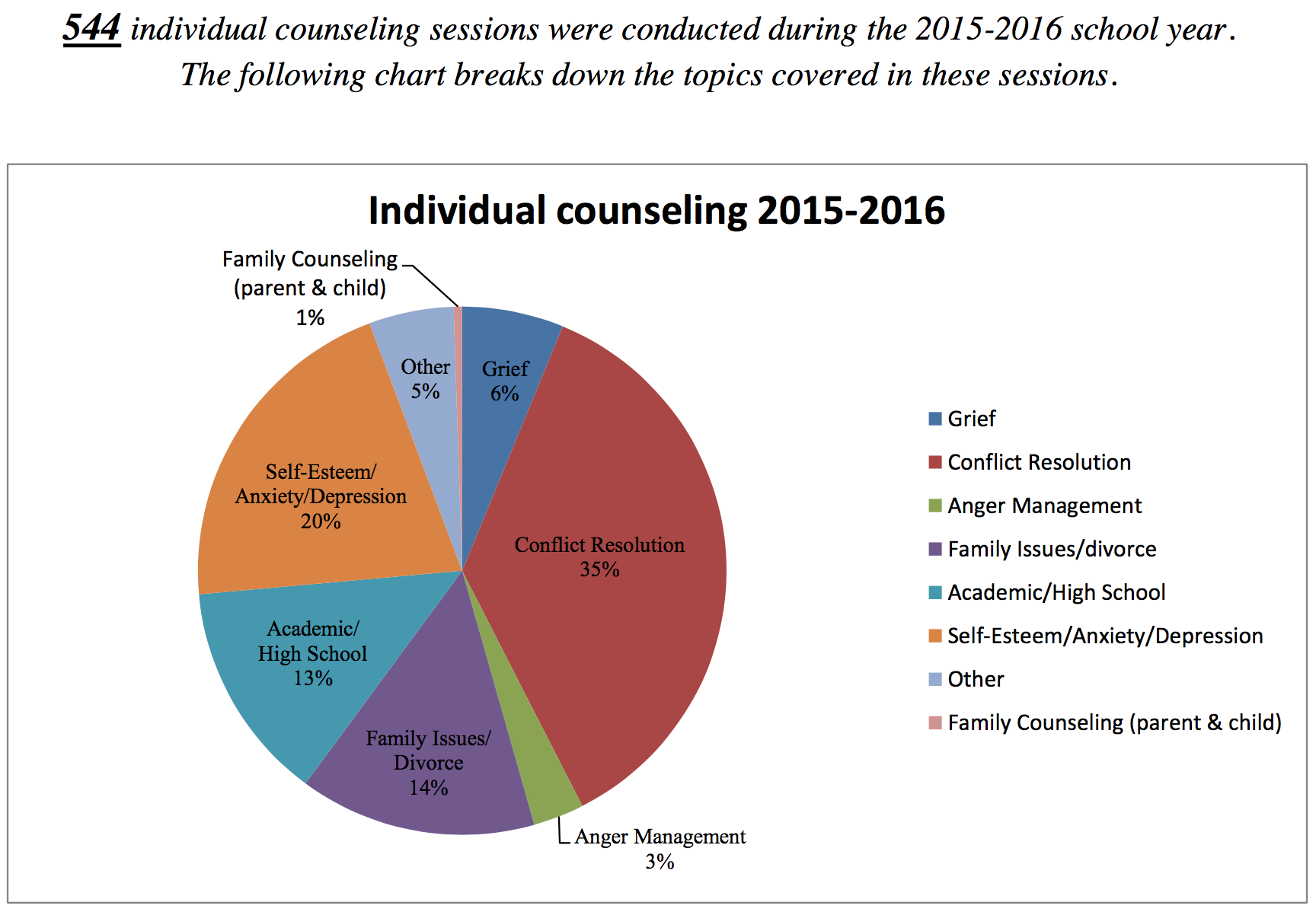
Once I’ve collected my data, I know the total number of individual counseling sessions I conducted that school year, along with the percentage of the sessions that fall in different categories {i.e. anger management, academic counseling, family issues, etc.}. Now what do I do with all of that information??

First, I compare my number of individual sessions to the total number from the previous year. Since this is my second year at my current school, my numbers increased A LOT from year 1 to year 2 {from 405 to 544}. This tells me that the students are beginning to feel more comfortable talking to me and that I have probably done a better job explaining to them what I do and how to see me. Now, while quantity is not always indicative of quality, that dramatic increase from my first to second year gives me an idea of how the student body is responding to my presence at the school. I do not expect such a big increase between this year’s sessions and next year’s sessions, although I am hoping for a small increase. {On Friday, I will be writing all about using data to set and evaluate goals, so check back then for more on this!}


Small Group Sessions

The data I collect from my small group sessions helps me know how my group participants are responding to the group. Since the surveys I use are anonymous, students are more likely to be honest. They may not tell me to my face that they didn’t feel respected by group members, but they will probably indicate it on a survey.

My Lunch Bunch data actually helped me work out some kinks in my sign up procedure {see my Lunch Bunch post for more info}. A large number of students indicated that they had problems signing up for Lunch Bunch, which surprised me, because I always make sure there is enough space on the list for every 5th grade girl to sign up. When I asked the 5th grade girls as a whole if anyone wanted to say why they had trouble with the sign up process, I learned that certain girls were signing up themselves and their friends, without their friends being aware. Those friends then couldn’t sign up for themselves on their own preferred days. If I hadn’t collected that data and asked about it, I may not have realized this was an issue to address for next year.


Needs Assessments & Program Evaluations

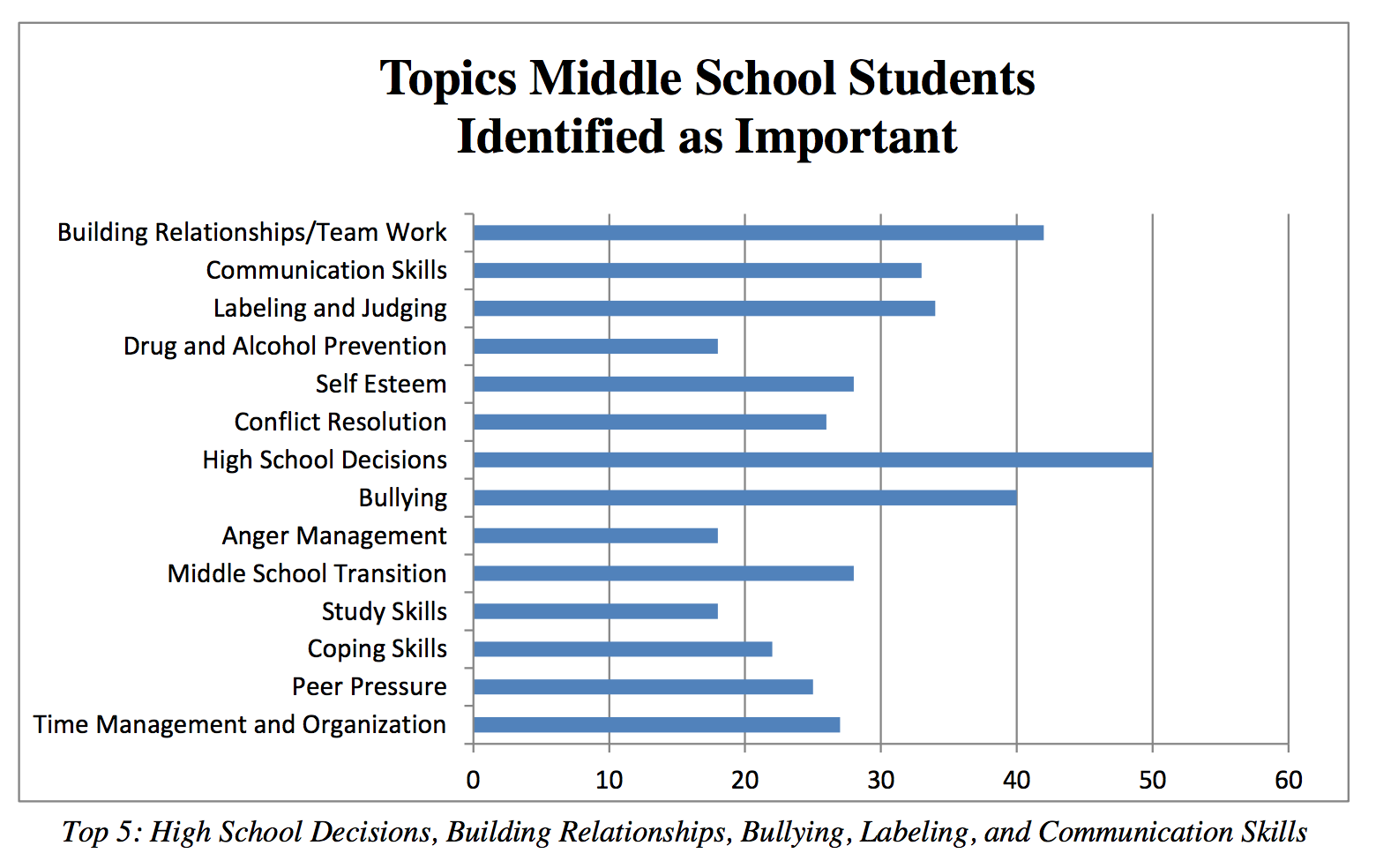
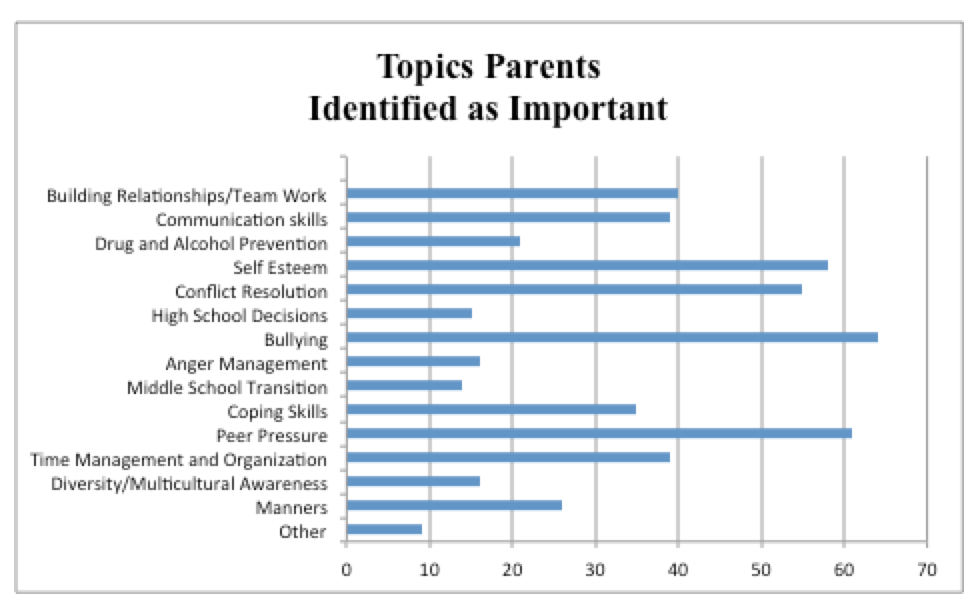
I use the data from these surveys A LOT when tweaking my counseling program for the next school year. I utilize the student and parent topic suggestions to drive what I present on in the classroom, and I take the written feedback into consideration, especially if it is something I have received from multiple students or parents.

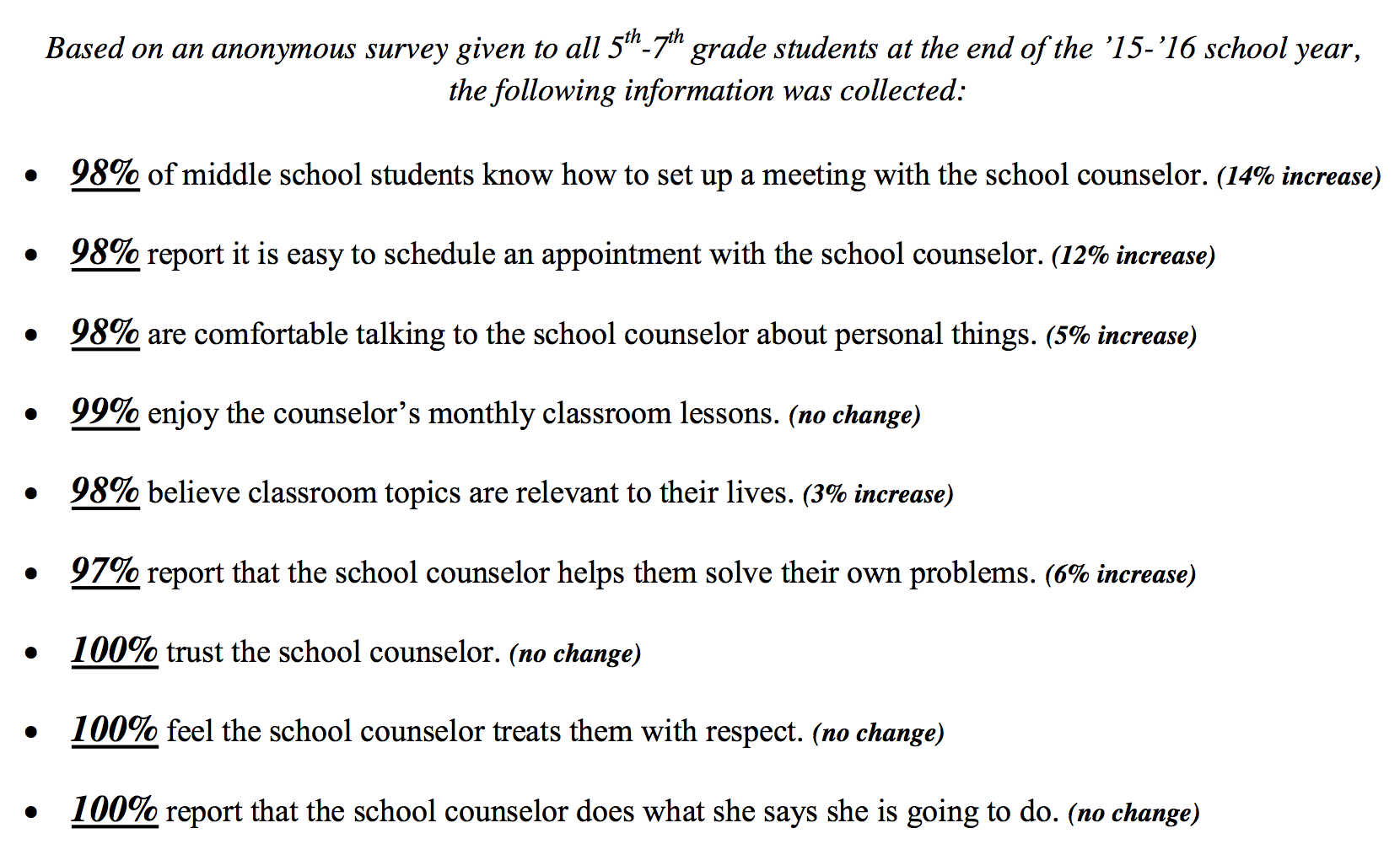
At the end of my first year at my current school, 84% of middle school students indicated they knew how to set up an appointment with me, which means that 16% did not know how to do this. Because I was potentially missing out on sessions with 16% of my middle school students, I made a point at the beginning of the next school year to explain in plenty of detail the many ways they can get in touch with me, and I reiterated these ways throughout the school year. At the end of this school year, 98% of students indicated that they know how to set up an appointment, which tells me that my method of explaining the process worked. I still want to get that number to 100% though!!

In my last parent survey, 78% indicated they understood the role of the school counselor, which told me that I needed to do some educating and advocating. In response to that data, I created a brochure for my counseling program to hand out to parents at my school’s Back to School Night. I also incorporated other marketing techniques {check out my marketing and advocating post here}.


Informal Data

As mentioned in part I of this series, I informally gather information from my lower school students by asking them to recall the lessons I presented throughout the year. I use this information in planning my classroom lessons for the following school year. For example, this year, when I informally assessed 3rd grade, there was one lesson that NONE of the students could remember until I reminded them of what it was. In fact, I even had a difficult time remembering. It was my first time implementing this particular lesson, and based on the information I acquired from those students, I will probably nix or alter that lesson for next year.


A big way I use my data to enhance my school counseling program is through setting and evaluating SMART goals. Come back to the blog on Friday for the final part of this series to learn about how those goals tie into my data collection!

View Part III Here


Screen Shot 2015-10-12 at 8.12.23 PM

Needs Assessments, Evaluation Methods, & Data, Oh My! Part I: Data Collection

Screen Shot 2016-06-01 at 12.48.45 PM

According to ASCA, school counseling programs should be data driven, but how exactly do we do that? Today I’ll introduce a series explaining how I collect data, interpret it, and use it to further my school counseling program. My way may not be the “right” way, but it has worked for me so far, and it has been a great way to show my stakeholders what I do throughout the school year. Part I will focus on data collection…enjoy!


Individual Sessions

I keep a general log of all individual sessions I conduct during each school year. Part of my data collection is counting and categorizing these sessions. The first year I implemented this method, I counted all sessions at the end of the year and calculated percentages for different categories (i.e. how many grief sessions, how many conflict resolution sessions, etc.). As you can imagine, that was A LOT of work all at once and was completely overwhelming.

IMG_4783


After that first year, I adopted a new system. I color code my individual session log by category {see above}, and every Monday, I get to school a little earlier than usual to add up my already categorized sessions. At the end of the year, all I have to do is add up my weekly count for each category. In my annual data report, I include a total number of all individual sessions and a pie chart breaking down the categories {because I’m a nerd, and I love pie charts}.


Screen Shot 2016-06-01 at 12.13.10 PM

In order to get these percentages, I divided the number of sessions in a category by the total number of individual sessions, then multiplied by 100. Example: 60 {# of anxiety sessions} / 544 {total # of sessions} = .11

.11 x 100 = 11%.

I’m not a math person, so if I can do it, you can do it!


Small Group Sessions

I use anonymous surveys to collect data from my small groups. {See my test-taking skills small group post to see how I use pre and post-test surveys to collect data}.

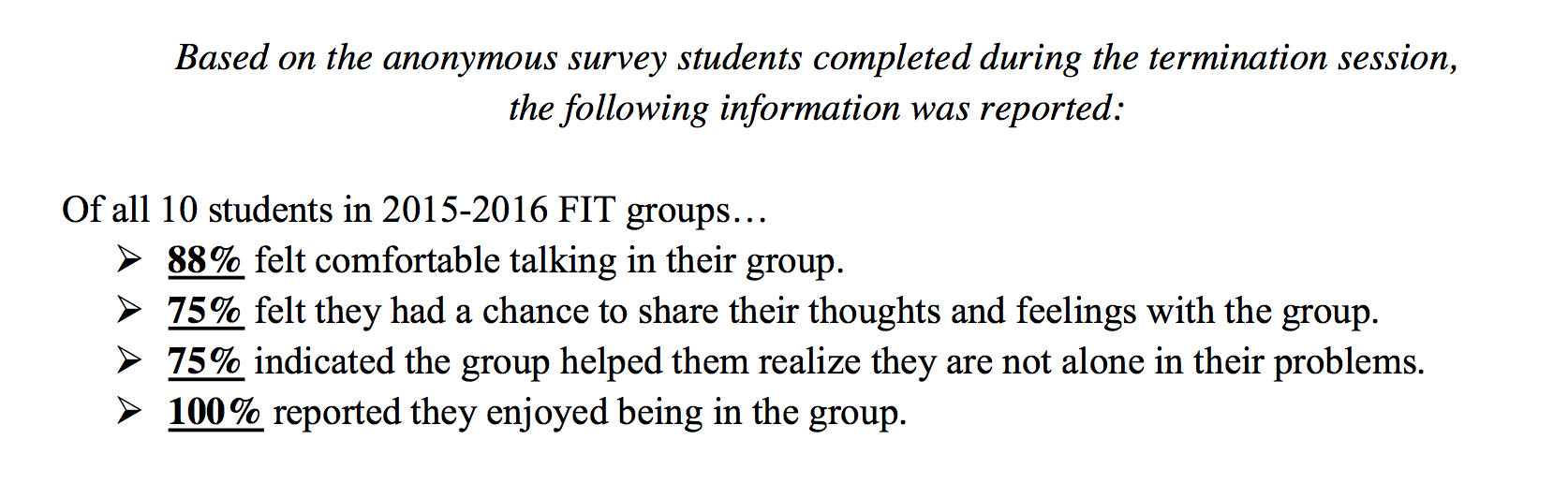
The surveys I use include simple yes or no questions that students answer during the termination session of a small group. Some questions include:

Did you feel comfortable talking in this group?

Did you have a chance to share your thoughts and feelings with the group?

Did this group help you realize you’re not alone in your problems?

Did you enjoy being in this group?

For these questions {where I want the answers to be ‘yes’} I count the ‘yes’ responses and divide the number of ‘yeses’ by the total number of participants, then multiply by 100 to get a final percentage. Here was my data for my Families in Transition groups this year:

Screen Shot 2016-06-01 at 12.22.30 PM

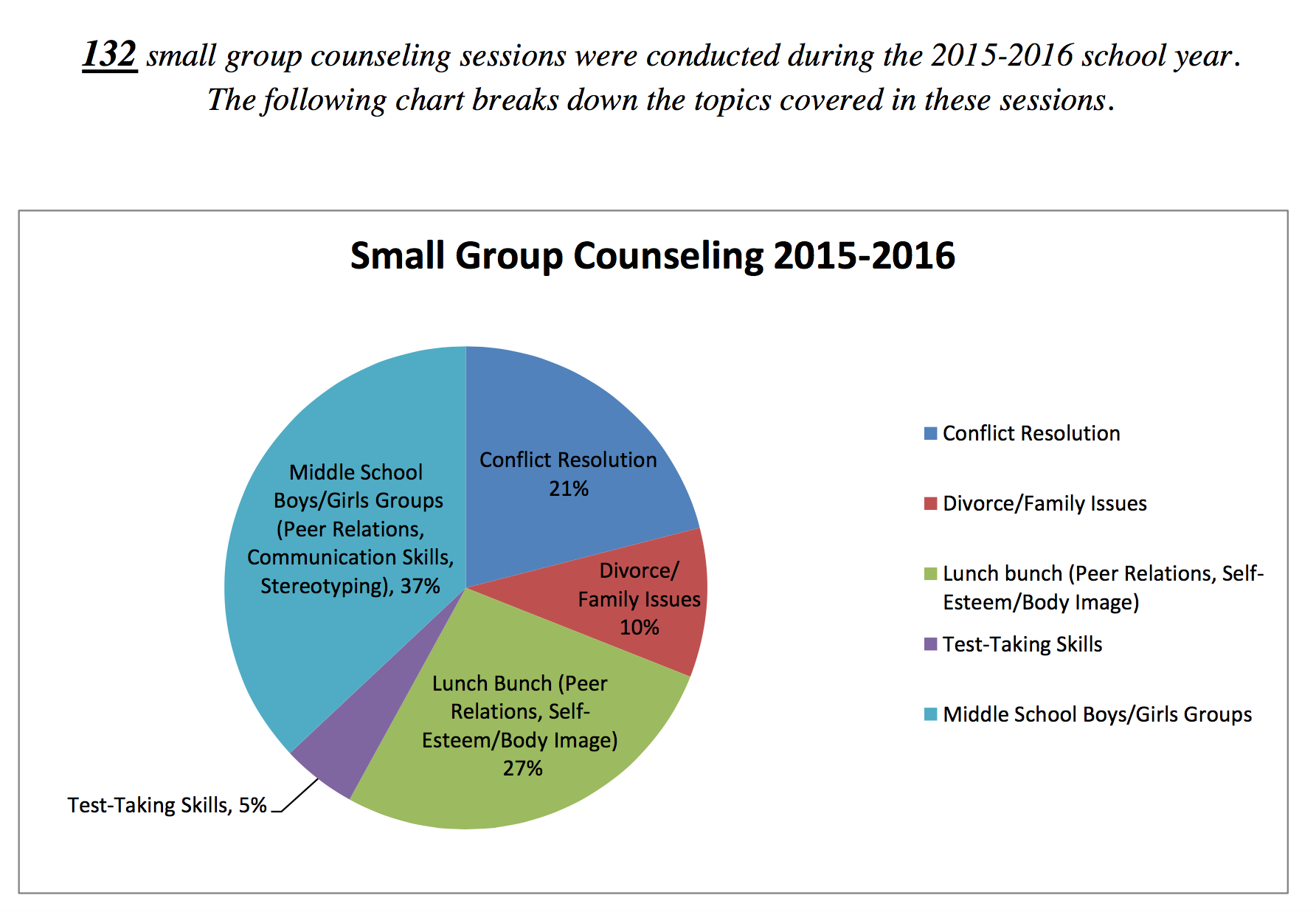
I also count total small group sessions and categorize them like I do with my individual sessions. Keeping a log for this really helps me keep track of that information.


Screen Shot 2016-06-01 at 12.23.29 PM


Need Assessments & Program Evaluations

The final major way I formally collect data is through needs assessment and program evaluation surveys completed by middle school students and all parents.

The survey I give to middle school students once again contains a series of yes or no questions. Some of these questions include:

Do you know how to set up a meeting with the school counselor?

Do you feel comfortable talking to the school counselor about personal problems?

Do you believe the counselor’s classroom lessons are relevant to your life?

Does the school counselor treat you with respect?

I count, divide, and multiply the same way I do with my small group surveys to get percentages for the entire middle school. Here were my percentages from this school year:

Screen Shot 2016-06-01 at 12.27.10 PM


The back of the survey includes a needs assessment, in which students circle up to 5 topics they think are important for me to present on to middle school students next school year. There is also space for them to write anything that helped them/stood out to them, as well as space for suggestions and feedback.

Screen Shot 2016-06-01 at 12.28.39 PM


The parent survey I use is sent every other year via SurveyMonkey. It includes the following statements, to which the parents respond “Strongly Disagree,” “Disagree,” “Neutral,” “Agree,” or “Strongly Agree”:

The school counselor responds to correspondence in a timely manner.

I enjoy reading the school counselor’s posts in the school newsletter.

The school counselor works collaboratively with administration, teachers, and parents regarding a child’s school success.

The school counselor is consistent and follows through on tasks.

The school counselor communicates in an effective manner to parents.

I understand the role of the school counselor.

Screen Shot 2016-06-01 at 12.43.29 PM

The parents then could select up to 5 topics they think are important for me to present to their children {choosing from the same list the middle school students do}.

Screen Shot 2016-06-01 at 12.34.31 PM


Informal Data Collection

I informally gather data from the lower grades in my final classroom lessons. I ask them to recall all of the lesson topics we covered that year, which tells me the most and least popular lessons, as well as the ones that stuck with students and made an impact. No percentages or math this time, but I still gather useful information!


I know data collection can seem intimidating, but it doesn’t have to be scary! Check back on Wednesday to see how I interpret the data I collect and then use it to further my counseling program.

View Part II Here


Screen Shot 2015-10-12 at 8.12.23 PM